BIG IDEA
The best leaders don’t wait for perfect conditions.
They build with one hand and hold a sword with the other.
Progress happens when you refuse to come down for your critics.
BACKGROUND
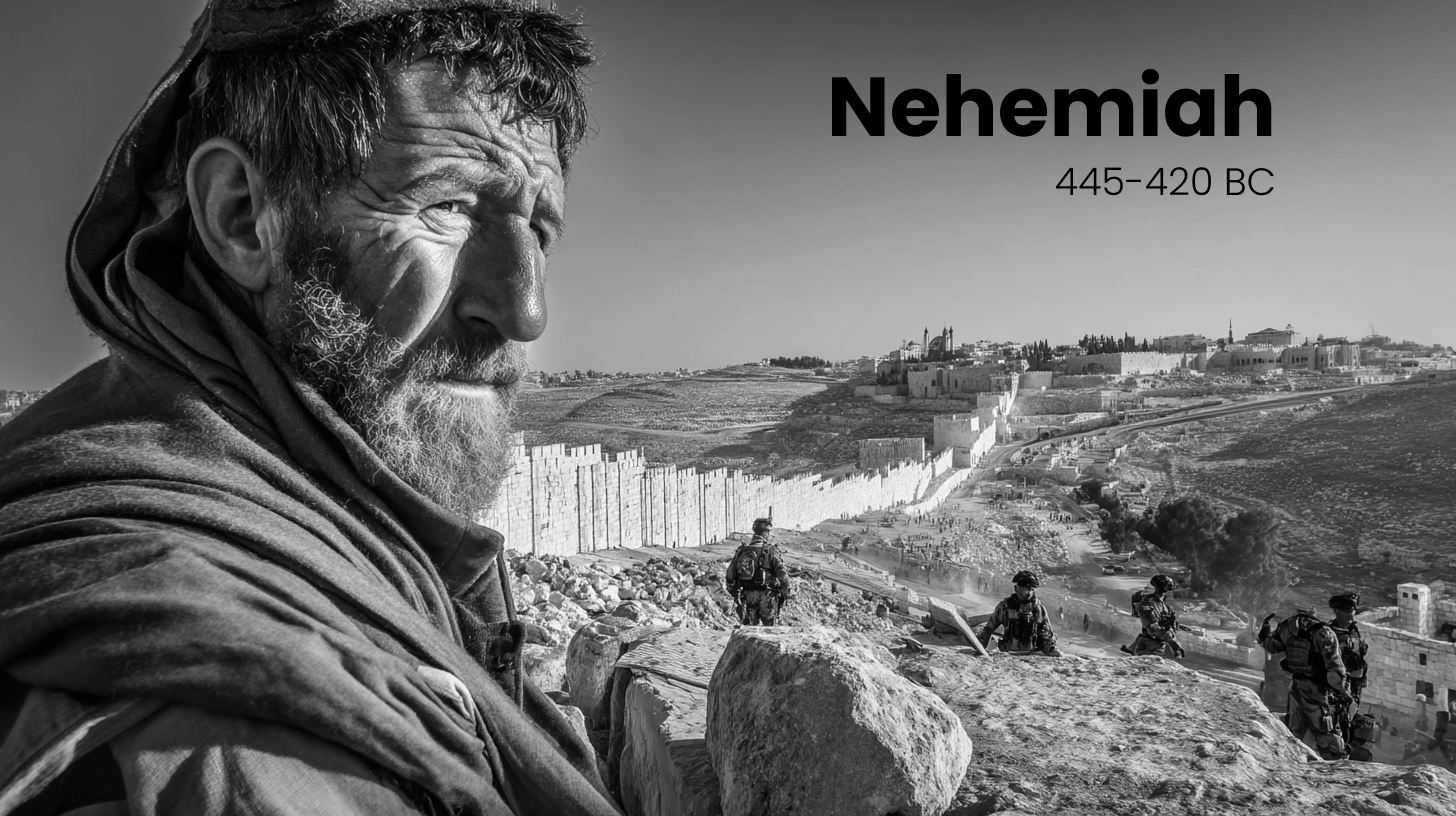
Nehemiah served as cupbearer to the king of Persia. The title sounds like a servant’s job. It was a seat of trust beside the most powerful man alive. He gave it up to rebuild a city’s broken walls. His story is about leading under pressure while enemies circled (Nehemiah 1–6).
STORY
Here’s what nobody told me about building something that matters.
I expected silence. I got sabotage.
Nehemiah learned this the hard way. He left everything to rebuild Jerusalem’s walls. Within days, his enemies started mocking. Then they plotted to attack the city (Nehemiah 4:8). Eventually they schemed to harm Nehemiah himself (Nehemiah 6:2).
Most leaders would’ve called a meeting. Maybe formed a committee. Perhaps asked for better timing.
Not Nehemiah.
He armed his workers. Half built while half stood guard. Every builder wore a sword (Nehemiah 4:17–18).
This is the posture I’m learning to embrace.
Building and defending at the same time. Progress and protection. Creating while critics circle.
I’ve seen it in my own life. I have long-time friends who say nothing when things are status quo. But when I’ve stepped into ministries and nonprofits pushing the world toward a better place, they suddenly find their voices. A few have pulled back to the point of alienation. When I take a stand, they get noisy.
Here’s what surprised me most: the sword I need isn’t for them. It’s for my own thoughts. Ridicule from people that close conjures doubts, and the doubts do more damage than the critics ever could. I’ve caught myself asking, “Were they ever really my friends?” — when the real question is simpler. Is my job to stay focused?
The opposition didn’t stop for Nehemiah either. They invited him to “talk things over” four times. Each invitation was a trap (Nehemiah 6:2–4). And the noise came from close — Tobiah had family ties inside Jerusalem itself (Nehemiah 6:17–18). Nehemiah’s response is legendary:
“I am doing a great work and I cannot come down.”
There it is.
The work itself becomes the answer to every distraction. I’m learning that the mission protects me from meaningless debates — including the ones I hold with myself.
Part 4 of 5 · ProfileMeet Nehemiah: the full profile →Character profileFifty-two days. That’s how fast the wall went up — because Nehemiah wouldn’t come down (Nehemiah 6:15).
After the wall was finished, something beautiful happened. The people gathered. They read Scripture aloud for hours. They wept. They celebrated (Nehemiah 8:9–12).
The wall was never really about the wall.
I read those chapters and see something else: space for restoration. For worship. For community to return to its roots.
We’re all building something. The critics came for Nehemiah. They’ve come for most builders I’ve watched. The invitations to “come down” multiply.
Keep your sword. Keep your trowel. Keep building.
Get it by email, free
One Bible character and one leadership lesson, every week.