There is a difference between chasing difficulty to prove ourselves and choosing a hard task because it is ours to finish.
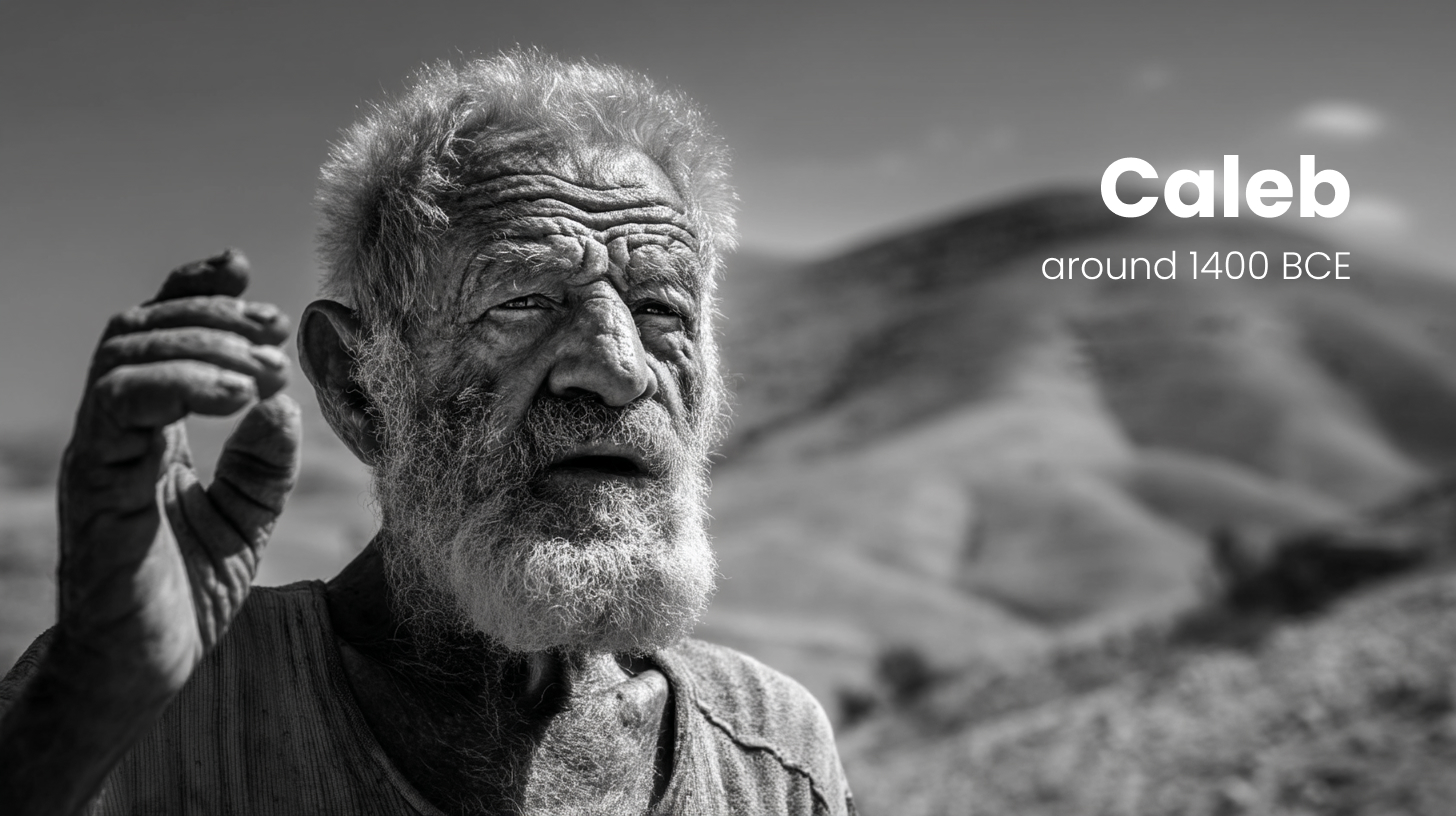
Caleb (KAY-leb) shows us the second kind.
He was one of twelve men Moses sent to explore Canaan before Israel entered the land. The scouts saw fortified cities and powerful people. Ten concluded that Israel could not succeed. Caleb quieted the crowd and said, “We should go up and take possession of the land, for we can certainly do it” (Numbers 13:30).
Caleb was not ignoring the facts. He had seen the same walls and warriors. His confidence came from what he believed God had promised, not from pretending the obstacles were small.
Part 2 of 5 · Gospel QuartetHear it sung: The Hill That Is Mine to Finish ▶Gospel quartet song · plays hereThe people followed the fearful report. That generation spent forty years in the wilderness, and Caleb waited through all of them. God described him as a servant with “a different spirit” who followed wholeheartedly (Numbers 14:24).
Forty-five years after the scouting trip, Caleb came to Joshua. He was now eighty-five. The land was being divided among Israel’s tribes, and Caleb could have asked for a quiet place. Instead, he requested the hill country around Hebron, about twenty miles south of Jerusalem in today’s West Bank (Joshua 14:6–12).
Part 5 of 5 · MapSee where this happened: Hebron in Caleb’s Story →Map of the places in the storyThe request was not random. Moses had promised that territory to Caleb because he had remained faithful. The area still had large fortified cities and formidable inhabitants. Caleb was asking to complete an old assignment, not collect an easy reward.
That changes how I hear his words. “Now give me this hill country” is not the boast of a man looking for a fight (Joshua 14:12). It is the resolve of someone who has carried a promise through disappointment, delay, and the death of an entire generation.
We often assume waiting should lower our expectations. Sometimes it should. Age, health, and responsibility can require us to adjust wisely. Caleb’s example is not permission to deny our limits or force every season to look the same.
It asks a better question: Has delay made us release what no longer belongs to us, or abandon something we are still meant to do?
The hardest assignment is not always the bravest choice. Neither is the easiest. Courage means seeing the obstacles clearly, remembering why the work matters, and choosing the task that is actually ours.
Caleb did not ask for difficulty itself. He asked for the chance to finish faithfully.

Get it by email, free
One Bible character and one leadership lesson, every week.