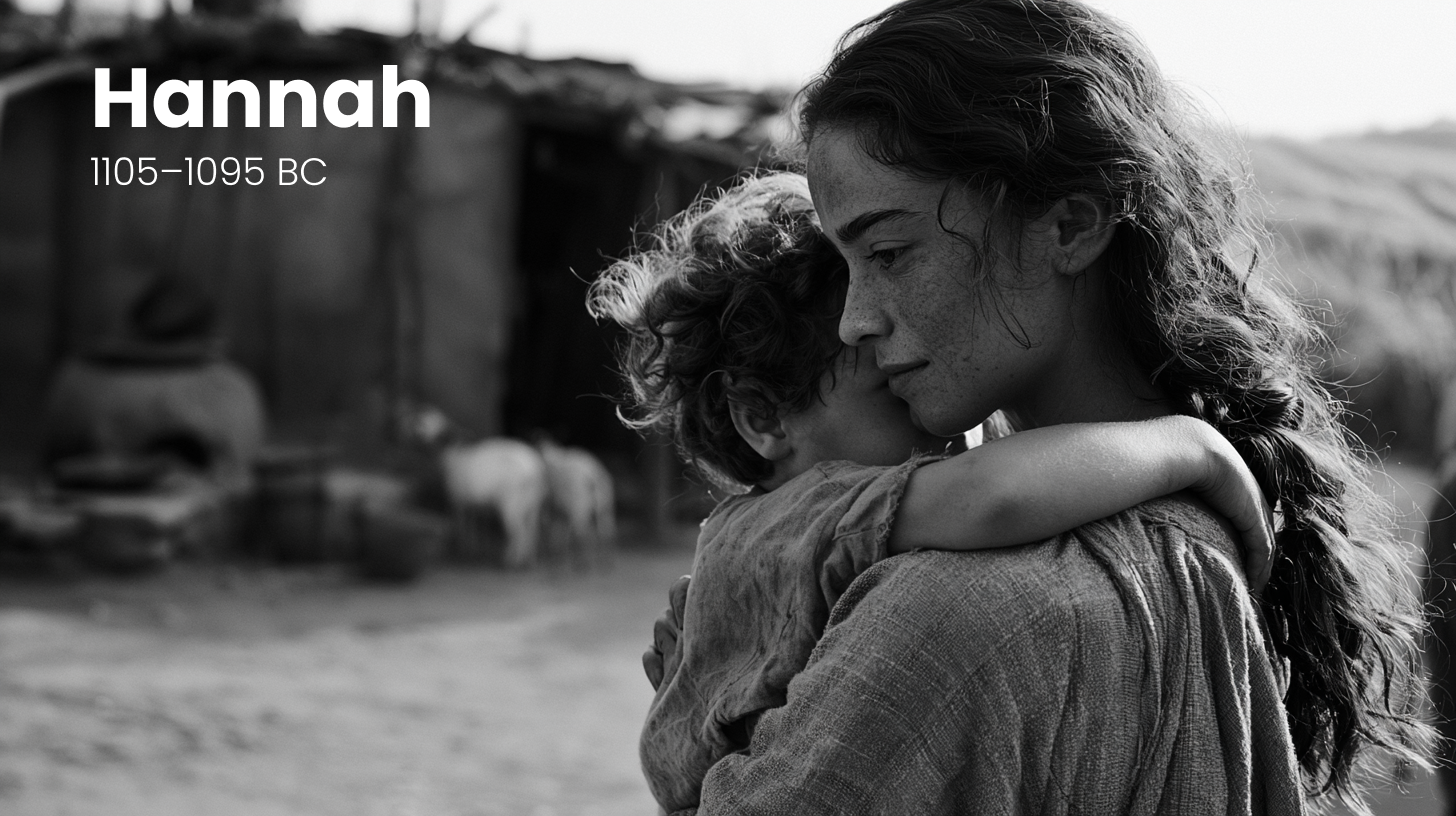
Hannah didn’t name her son for the gift. She named him for the asking. I’ve come to think a good name is a receipt, not a wish.
Hannah was childless, in an ordinary household in the hill country of Ephraim (about twenty miles north of Jerusalem), around 1100 BC. She prayed at Shiloh — 1 Samuel 1.
Part 5 of 5 · MapSee where this happened: Shiloh →Map of the places in the storySTORY
A woman stands at the doorpost of the tent shrine at Shiloh, lips moving, no sound coming out. The old priest watches her mouth for a while and decides she’s drunk.
She isn’t. She’s saying the truth to the only one who can do anything about it. Eli hears her out and blesses her.
Then the verse I keep going back to: “she went her way and ate something, and her face was no longer downcast” (1 Samuel 1:18).
She isn’t pregnant. Nothing has been delivered. That’s the part I can’t get past — the gratitude arrived before the answer did.
When the boy comes, she names him Samuel: because I asked the LORD for him (1 Samuel 1:20). Not a hope. Not an ancestor. She named him for the request, so that anyone who said his name repeated the prayer out loud without knowing it.
My daughter-in-law is named Hannah.
She and my stepson prayed for a baby for years. Our whole family prayed alongside them.
They named her Shiloh Ray.
Shiloh for the prayer. Ray for my father.
It took me a beat to see it. A woman named Hannah named her daughter after the place where the first Hannah prayed for a child.
Three thousand years apart, and neither one named the baby for the answer. Both reached back and named her for the asking.
Shiloh isn’t a name that means we got what we wanted. It’s the name of a doorpost where a woman said a true thing out loud and was heard.
Her name faces backward — a prayer, and my father. We’re thankful for the answer, and we’re watching for what God has in store for Shiloh Ray.
You can name a child for what you hope she’ll become. Or you can name her for what it took to get her here.
Names mean things. This one means a bunch.
Get it by email, free
One Bible character and one leadership lesson, every week.