BIG IDEA
The thing you’re most ashamed of might be the thing that makes you a leader.
But watch out. The same fire that makes you strong can burn down your own house.
BACKGROUND
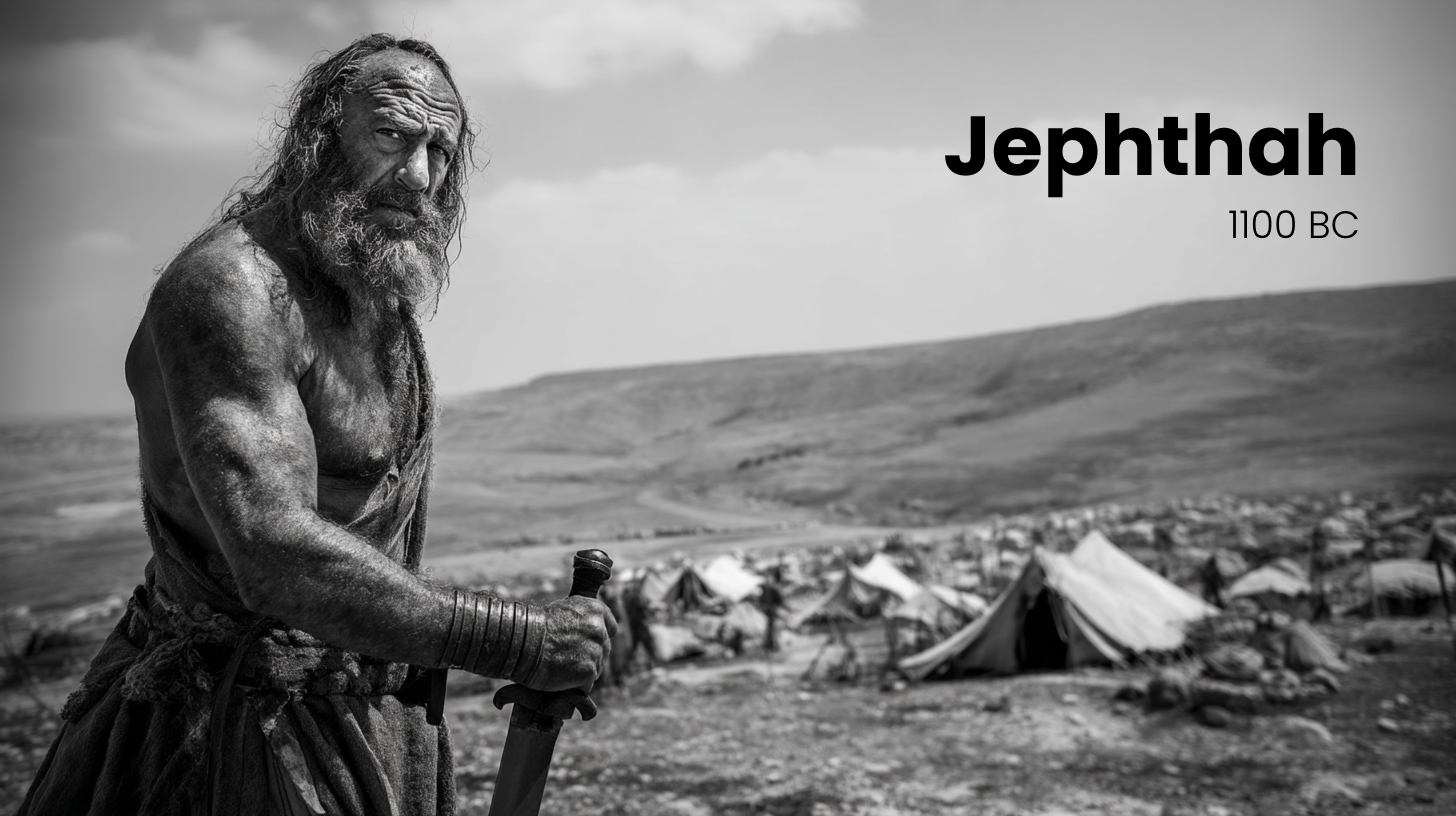
Jephthah lived in Israel about 3,000 years ago. His mother was a prostitute, and his half-brothers never let him forget it. They kicked him out so he couldn’t share the family money (Judges 11:1-3).
So he ran. He ended up in a place called Tob.
Where’s Tob? Way out past the Jordan River, in the wild country where Jordan and Syria meet today. Think badlands. Empty. Rough. The kind of place people go when nobody wants them.
That’s where the story starts.
STORY
Jephthah didn’t sit around feeling sorry for himself.
He rounded up other outcasts. Guys nobody else wanted. And he turned them into fighters.
Pretty soon everybody knew his name. Jephthah was tough (Judges 11:3).
Then trouble showed up.
An army called the Ammonites started crushing Israel. The leaders of Gilead got scared. They needed a real fighter.
And they knew exactly who to call.
The same guy they threw away.
So they came crawling back.
Jephthah asked the obvious question. “Didn’t you hate me? Didn’t you kick me out?” (Judges 11:7)
Good question.
But here’s the surprise. He said yes anyway.
We usually think our worst moments ruin us. The times we got left out. The times we got hurt. We figure those years were wasted.
But maybe they weren’t.
Out in the badlands, Jephthah learned to lead. He learned to survive. He learned to fight when the odds were terrible.
Those were the exact skills Israel needed.
God’s Spirit came on him (Judges 11:29). He beat the Ammonites. The reject became the hero. The Bible even lists him as a hero of faith (Hebrews 11:32).
Now, if this sounds familiar, it should.
Remember Joseph? His brothers threw him away too. But years later he saved them — and forgave them. He hugged them and cried. “You meant it for evil, but God meant it for good” (Genesis 50:20).
Jephthah’s story is different.
Nobody came back to say sorry. The leaders only showed up because they needed something. No hugs. No tears. Just a deal.
And here’s the part I haven’t thought about much.
The same toughness that won the war also got him in trouble. Jephthah made a foolish promise to God — one that broke his own heart and hurt his family (Judges 11:30-40).
The edge that wins the battle can also cut the people you love.
Part 4 of 5 · ProfileMeet Jephthah: the full profile →Character profileSo what does a guy like Jephthah teach me about leading?
Two things.
One: the place where nobody wanted me might be the place that’s training me.
Two: being strong isn’t enough. The best leaders know when to fight — and when to put the sword down.
Joseph shows me my pain can become my purpose.
Jephthah reminds me my strength needs a soft heart to go with it.
So here’s my question.
What if the thing that pushed me out is getting me ready for something I can’t see yet?
The people who didn’t want me might need me someday.
I need to remember to bring my heart along with the sword.
Get it by email, free
One Bible character and one leadership lesson, every week.