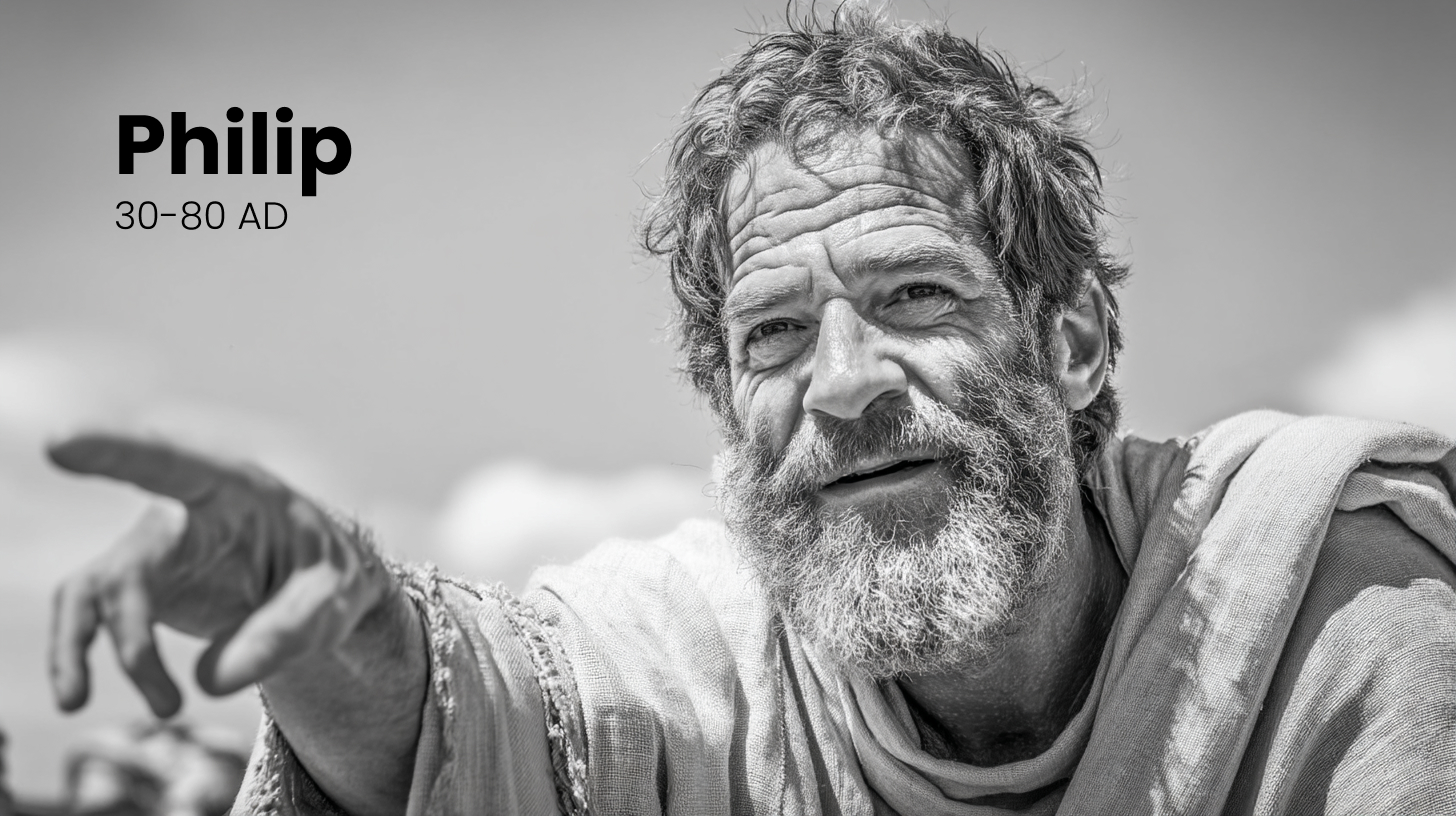
BIG IDEA
What if the day you’re needed most is the day God tells you to leave?
I chase scale. I measure impact by crowd size.
But the moment that outlived Philip came when he walked away from the crowd—for one person on an empty road.
BACKGROUND
Philip was a first-century leader, chosen to help distribute food to the widows of the early church (Acts 6:5). Later he’s known simply as “the evangelist” (Acts 21:8).
His story exposed something I’d missed about influence.
STORY
Picture it. A city is buzzing. Crowds gather daily. Lives are changing.
Philip is in Samaria (modern-day West Bank, near Nablus). The momentum is electric (Acts 8:5–8).
Everything a leader dreams of is happening.
Then an angel of the Lord speaks. Go south—to the desert road that runs from Jerusalem down toward Gaza (modern-day Gaza Strip, on the coast) (Acts 8:26).
Wait—what?
Leave the revival?
Walk away from the crowds?
Trade the stage for a dusty road and a stranger?
He goes.
No fanfare. No crowd. Just Philip—and then the Spirit tells him to run to a passing chariot (Acts 8:29–30).
Inside sits an Ethiopian official (from the kingdom of Kush, in modern-day Sudan). Powerful. Searching. Puzzling over a scroll of Isaiah he can’t unlock.
Philip climbs in.
They talk.
The official believes, and is baptized right there on the road (Acts 8:35–38).
THE TWIST
Here’s what I missed.
That one conversation carried the gospel toward Africa. Tradition holds the Ethiopian church traces its roots to this encounter. Years later, Philip’s own four daughters would prophesy in his home (Acts 21:9). The obedience he lived on that desert road became the air they grew up breathing.
But Philip couldn’t have known any of that.
He didn’t leave Samaria thinking, I’m about to reach a continent. He didn’t climb into that chariot to change generations. He climbed in because God said go—and he went. The ripple was never his to see.
That’s the part that stops me.
I used to think obedience was about the outcome—the crowd, the continent, the story someone tells later. It isn’t. In the moment, the outcome was never mine to hold.
Have I lived my own small version of this? I don’t know. I may never know whether the conversations and relationships I’m in will change anything for the generations after me. But when I look in the rearview mirror, I can see the hand of God. Miracles, worked through ordinary moments. In the moment, though? They felt like normal conversations. Nothing electric. Nothing that announced itself.
Part 4 of 5 · ProfileMeet Philip: the full profile →Character profileMaybe that’s the point for me. Be obedient in the moment. Leave the rest up to God.
My friend Clare De Graaf wrote a whole book on this—The 10-Second Rule. The idea is simple: when you sense God nudging you toward something, do the next thing you’re reasonably sure He’s asking—within ten seconds, before you talk yourself out of it. Not because you can see where it leads. Because He asked.
Philip had his ten seconds on a desert road.
The crowd in Samaria? Others came to serve them—Peter and John followed close behind (Acts 8:14).
The man on the desert road? Only Philip was there.
This one person changed history—though Philip never lived to see how far it went.
Maybe today’s interruption isn’t a distraction from the call.
Maybe—when it’s God who redirects me—it’s the whole point.
I don’t need to see the ripple. I need to be obedient in the moment… it makes me think.
Get it by email, free
One Bible character and one leadership lesson, every week.
2 comments
Sharing Jesus and His love often/ usually happens one to one not one to stadium crowds. Often it is not our words that demonstrate love but our works: preferring the brother, a smile, a glance of empathy. These actions can open doors to conversations that lead to conversions.
Ye are the light of the world.
I couldn’t agree more. It’s simple and we often don’t realize it.
Thanks for the comment.