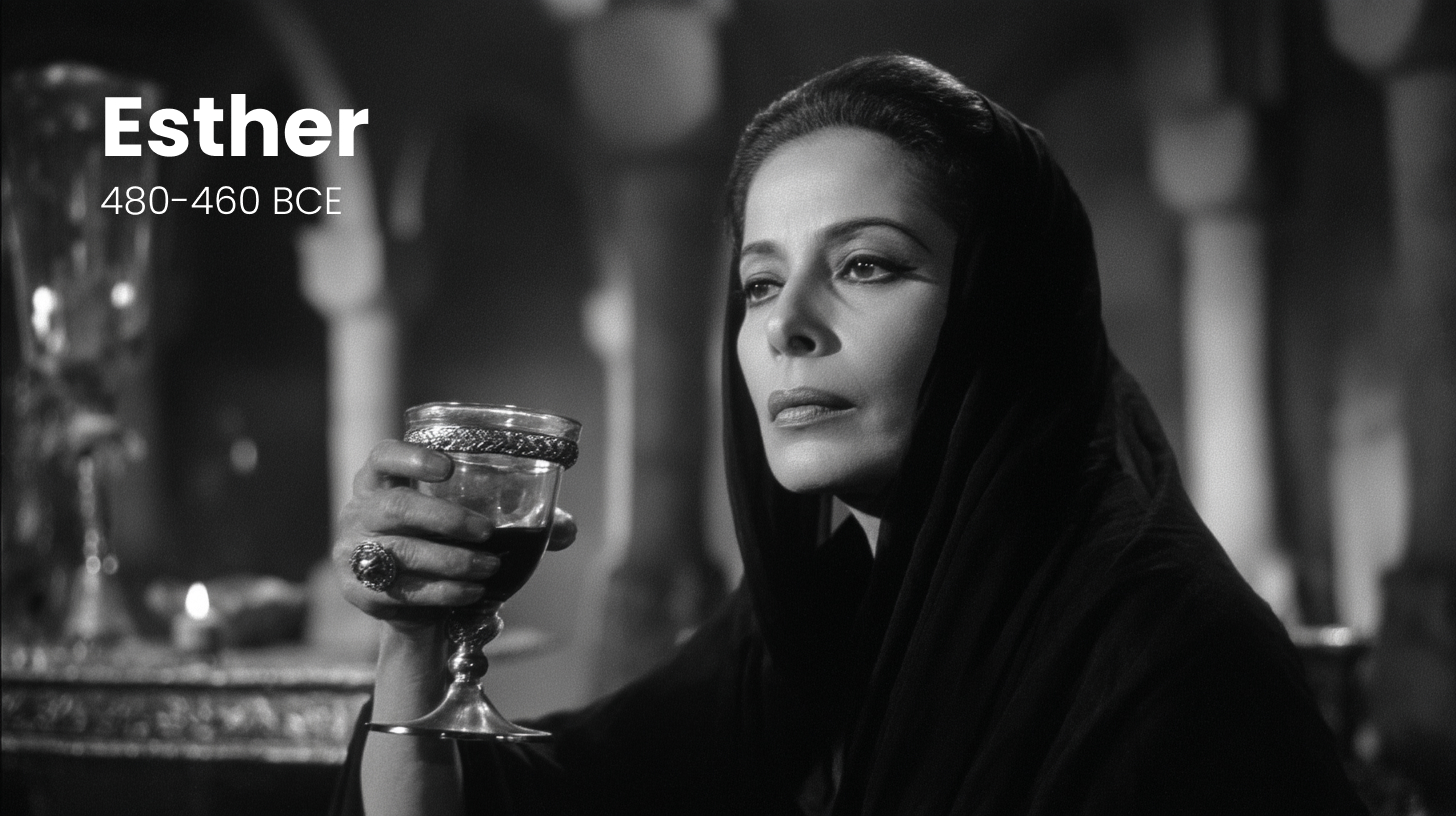
I don’t get to pick my defining hour. Neither did Esther. The question I keep circling isn’t whether that moment will come—it’s whether I’ll be ready when it does.
Background
Esther was a Jewish orphan who became queen of Persia. An unlikely leader with no credentials except courage and timing. Her story shows me that preparation happens in the dark, long before the spotlight found her.
The Story
She had one shot.
One conversation with a king who hadn’t asked to see her. One audience that could end in her execution.
The law was clear. Anyone who approached the king uninvited faced death—unless he extended his golden scepter (Esther 4:11).
Esther hadn’t been summoned in thirty days.
But her people faced genocide. A decree had been signed. Every Jew in the empire would be destroyed (Esther 3:13).
Her cousin Mordecai sent her a message that changed everything:
“Who knows whether you have come to the kingdom for such a time as this?” (Esther 4:14)
Here’s what I missed the first dozen times I read this.
Esther didn’t storm in demanding change. She didn’t lead with her agenda. She threw a dinner party.
Actually, two dinner parties (Esther 5:4-8).
She waited. Built relationship. Created space for the right moment to emerge.
The leaders I’ve most wanted to imitate weren’t the boldest ones in the room. They were the positioned ones—patient, watching, ready.
Between those two dinners, the king couldn’t sleep. He read the royal records. He discovered Mordecai had once saved his life (Esther 6:1-3).
Timing Esther couldn’t manufacture. Circumstances no one in the story could orchestrate.
At the second banquet, Esther finally spoke. She revealed the plot. She named the villain. The king acted immediately (Esther 7:3-10).
Her people were saved.
What strikes me about Esther is how her story points beyond itself. A deliverer rises from obscurity. An innocent stands in the gap for the guilty. Someone risks everything so others might live.
Centuries later, another would do the same—not just risking death, but embracing it.
Here’s where I have to be honest, though. I may never get an Esther-sized moment. No throne room. No empire hanging on one conversation.
But I’ve stopped believing that lets me off the hook.
Part 4 of 5 · ProfileMeet Esther: the full profile →Character profileLong before the banquets, Esther was being watched. She won favor with everyone who saw her, back when nothing was at stake (Esther 2:15). The big moment found her because the small ones had already shaped her.
My kids are watching how I react when the day goes sideways. The people in my organization are watching how I behave when I think no one important is in the room.
So I’ve set a personal goal, and I keep it in front of me every day: I want the distance between how I behave when things are going well and how I behave when things are topsy-turvy to be very close.
How am I when things aren’t going my way?
I learned something about that in college, driving a rental car through the desert between LA and Vegas. The tire blew out. I opened the trunk and found the spare flat and shredded. I was renting from a cheap place, and I didn’t have much extra money — but I’d expected a spare. What followed was one adversity after another, and a live demonstration, running in my head the whole time, of whether I could keep myself in check.
A phrase surfaced out there that still comes back to me: “Well, didn’t want that to happen.”
But so what. It happened. Now what — that’s the important part.
The world watched Esther.
The world is watching me.
Your “such a time as this” might not be a moment at all. It might be this afternoon, with an audience of one.
Get it by email, free
One Bible character and one leadership lesson, every week.