Big Idea
Peak performance has a ceiling. The same leader who commands the impossible can still fall apart. We’re not built for unending victory—and pretending otherwise will break us.
Background
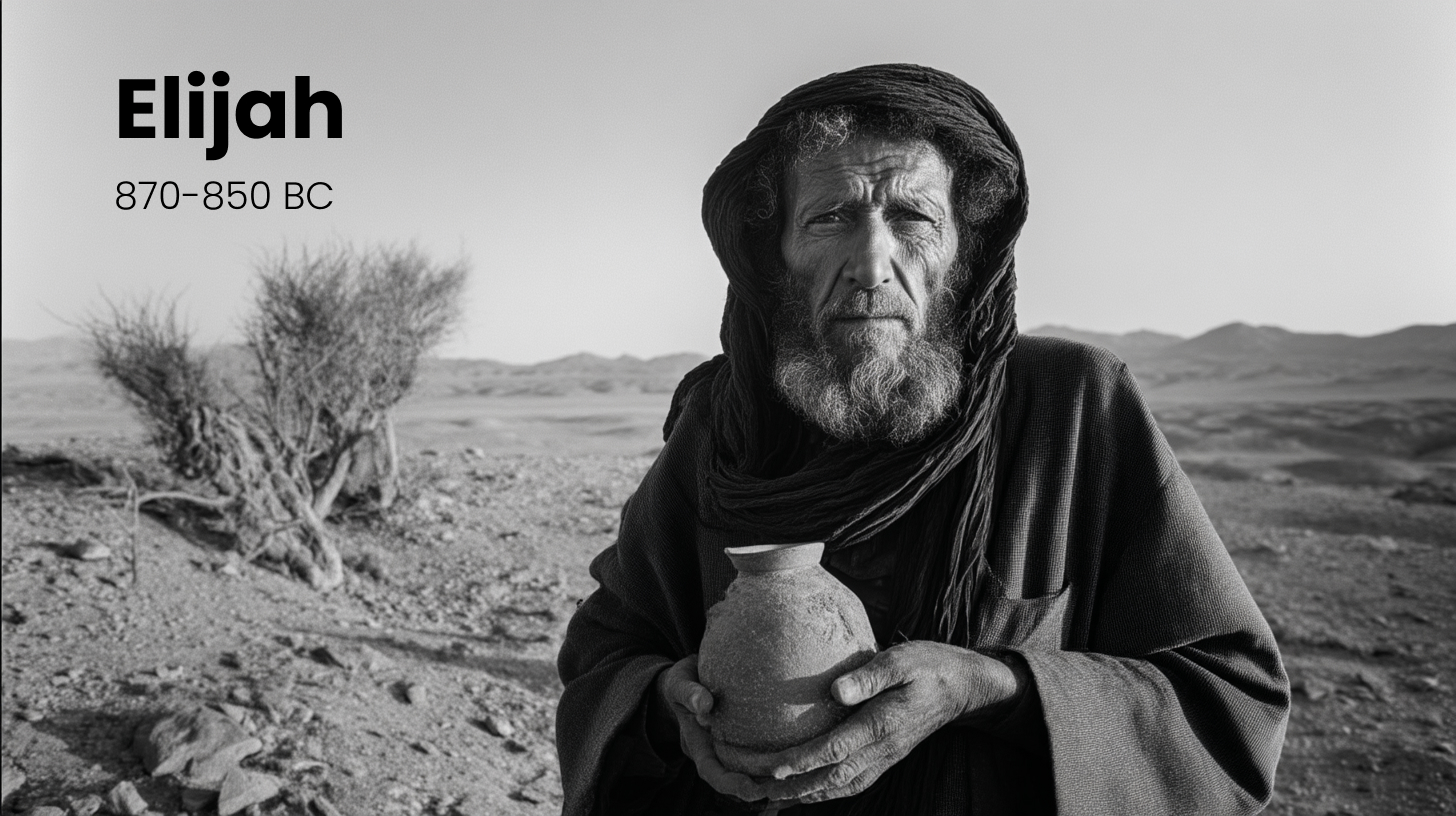
Elijah was an ancient prophet who stood alone against a corrupt kingdom. He challenged kings, predicted drought, and raised the dead. His story spans 1 Kings 17-19 and 2 Kings 2—a leadership arc that reaches impossible heights before crashing to devastating lows.
Story
Imagine commanding fire to fall from the sky.
Then, forty-eight hours later, begging to die.
That’s Elijah’s story. And maybe ours too.
On Mount Carmel, Elijah faced 850 false prophets. He mocked them. He drenched his altar with water. Then fire fell from heaven and consumed everything—stones, dust, water (1 Kings 18:38).
The crowd fell on their faces. The enemy scattered.
Total victory.
And then?
One threat from Queen Jezebel, and Elijah ran. Not walked—ran. Into the wilderness. Alone. Collapsed under a tree and asked God to end his life (1 Kings 19:4).
Think about this…we might have missed it in his burnout:
It doesn’t come from failure. It comes from success.
The very thing that made Elijah powerful—his intensity, his willingness to stand alone—was the same thing that emptied him.
God didn’t lecture him. Didn’t quote Scripture. He sent an angel with bread and water (1 Kings 19:5-6). Then he sent him to sleep.
Twice.
The prophet who called fire from heaven needed a nap and a snack.
There’s something almost embarrassing about that. We want our heroes to transcend human limits. We want to transcend them ourselves.
But Elijah’s story tells us something different.
Part 4 of 5 · ProfileMeet Elijah: the full profile →Character profileCenturies later, Jesus took Peter, James, and John up a mountain. Moses appeared. So did Elijah—talking with Jesus about what was coming (Luke 9:28-31). The prophet who wanted to die now stood in glory, helping to usher in something greater.
Malachi prophesied that Elijah would return before the great day (Malachi 4:5-6). That promise pointed forward to John the Baptist, preparing the way.
Elijah’s lowest moment didn’t disqualify him. It prepared him.
My dad had a saying: “Are you as open to God’s truth today as you were the day you first found it?”
Maybe the crash after the conquest isn’t a bug in the system.
Maybe it’s the doorway to something we can’t reach any other way.
Get it by email, free
One Bible character and one leadership lesson, every week.