BIG IDEA
The moment we become convinced we see more clearly than everyone else, we’ve already started walking toward disaster. Certainty feels like strength. But sometimes it’s just a shortcut past the wisdom we weren’t patient enough to receive.
BACKGROUND
Judas Iscariot was one of twelve hand-picked leaders in history’s most influential inner circle. He managed the money. He had a seat at the table. And yet, he became synonymous with betrayal—not because he was an outsider, but precisely because he was so close.
STORY
Thirty pieces of silver.
That’s the price of a slave. It’s also what Judas accepted to betray his friend (Matthew 26:15).
Here’s what’s strange.
Judas wasn’t the obvious villain. He wasn’t lurking in shadows. He was trusted. He carried the money bag (John 13:29). He had access.
And that’s exactly where things went wrong.
We don’t know exactly what Judas expected. Some scholars think he was trying to force a confrontation—push Jesus into finally claiming political power. Others think he simply lost faith in the mission.
What we do know: he thought he knew better.
The timeline matters here.
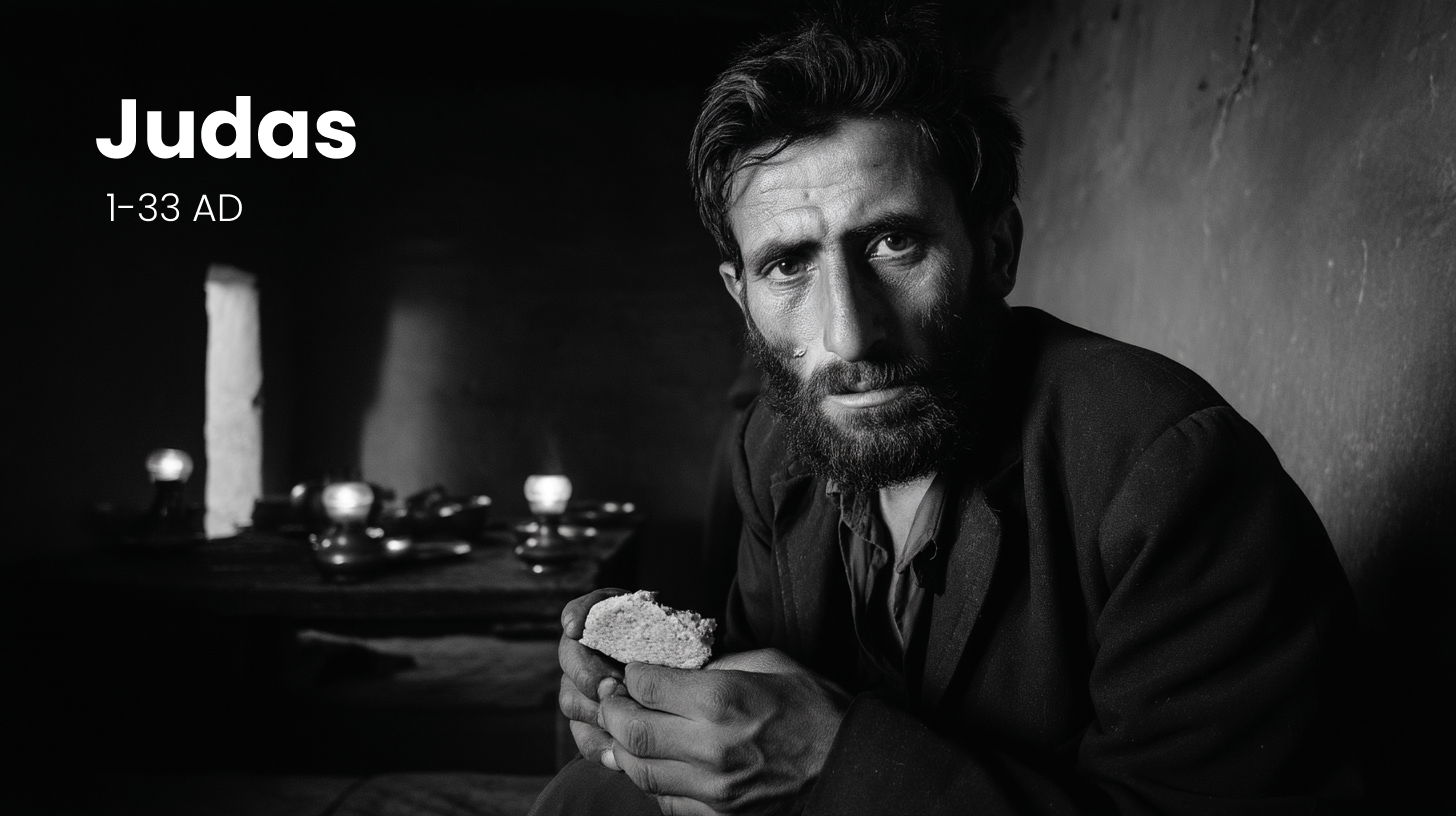
At the last supper, Jesus dips bread and hands it directly to Judas. A gesture of honor. A final invitation (John 13:26-27).
Judas takes it and leaves.
Later, in the garden, Judas greets Jesus with a kiss. The signal to the soldiers. Even the betrayal is wrapped in intimacy (Matthew 26:49).
And then comes the part we rarely talk about.
When Judas sees what happens next—the arrest, the sham trial, the march toward crucifixion—something shifts. He returns the money. He confesses: “I have betrayed innocent blood” (Matthew 27:4).
The religious leaders shrug. “What is that to us?”
Remorse without repair is its own kind of trap.
Here’s what sticks out to me.
Proximity doesn’t equal alignment. Judas was close to Jesus physically. But his heart drifted toward a different agenda.
We do this too.
We sit in the meetings. We nod at the mission statement. And somewhere along the way, we start running a parallel operation in our minds—convinced our version is smarter, more practical, more realistic.
Part 4 of 5 · ProfileMeet Judas: the full profile →Character profileThe danger isn’t disagreement. Healthy teams disagree.
The danger is secret certainty. The private conviction that we see what others miss.
That kind of certainty doesn’t ask questions. It stops listening. And eventually, it acts alone.
Jesus, interestingly, never stopped offering connection. The bread. The naming. Even the greeting in the garden: “Friend, do what you came to do” (Matthew 26:50).
The door stayed open.
Judas just never walked back through it.
The question for me isn’t whether I am capable of betrayal; I am.
It’s whether I can be humble enough to recognize when I’ve started believing my own version of the story—and courageous enough to return before certainty leads me into the night.
Get it by email, free
One Bible character and one leadership lesson, every week.