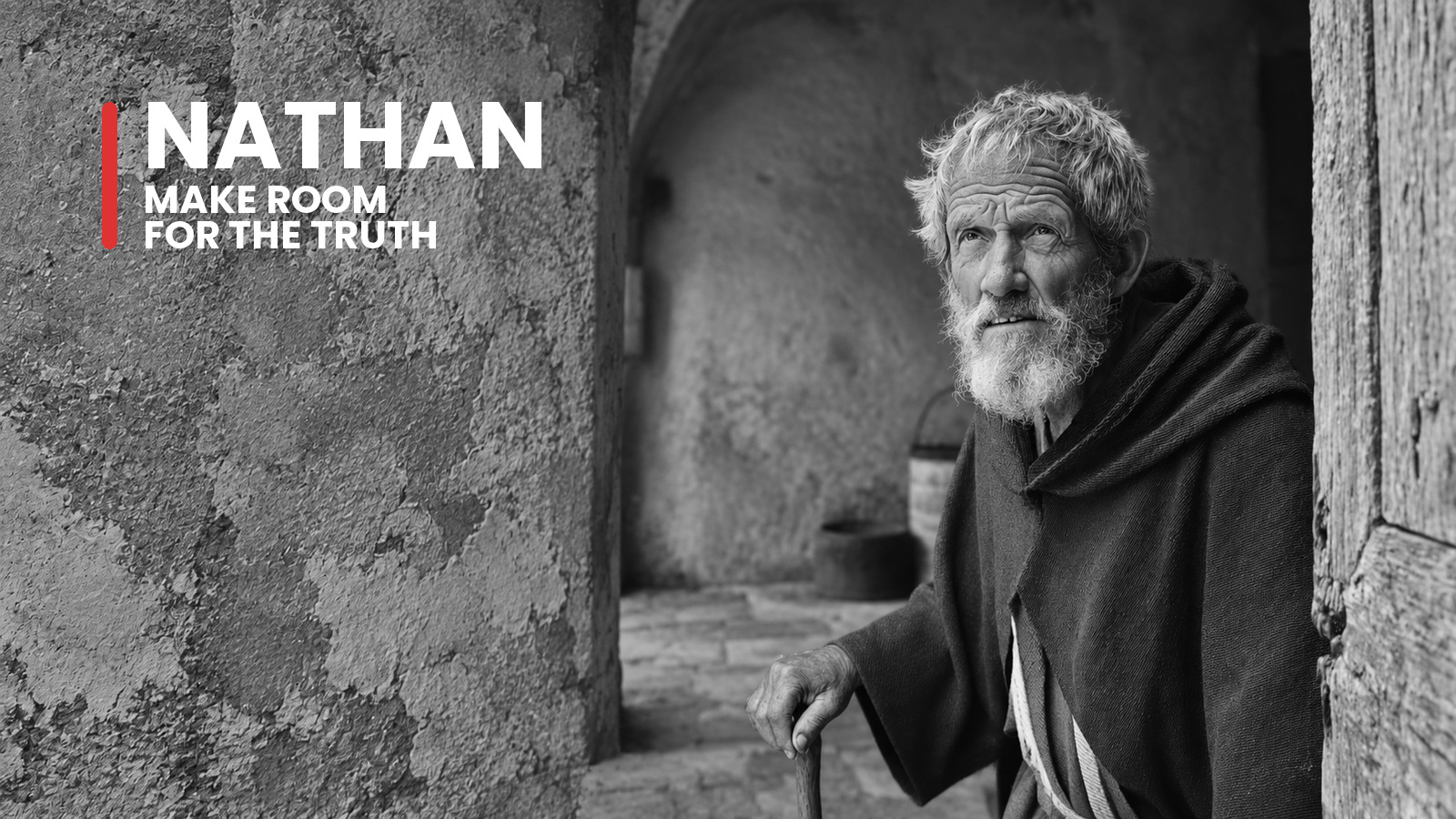

I want the people I lead to be safe telling me when I am wrong. If keeping my respect means hiding a problem, my position has become part of the problem. I need someone who cares enough to speak, and I need to make room to listen.
Nathan (NAY-thun) was a prophet, someone who delivered God’s messages. He advised David, the king of ancient Israel. Their story takes place in Jerusalem, the city that still stands in the hills about 32 miles east of the Mediterranean coast.
Part 5 of 5 · MapSee where this happened: Jerusalem in Nathan’s Story →Map of the places in the storyDavid had slept with Bathsheba (bath-SHEE-buh), another man’s wife. When she became pregnant, David tried to hide what he had done. He then arranged for her husband, Uriah (you-RYE-uh), to die in battle. Afterward, David took her as his wife (2 Samuel 11).
God sent Nathan to confront him. Nathan began with a story about a rich man who owned many animals. A poor neighbor had one lamb, raised with his children and loved like part of the family. When a visitor arrived, the rich man took the poor man’s lamb for the meal instead of using his own (2 Samuel 12:1–4).
David was furious. He could see the cruelty in someone else’s choice.
Part 2 of 5 · Gospel QuartetHear it sung: Let Someone Tell You the Truth ▶Gospel quartet song · plays hereThen Nathan said, “You are the man!” (2 Samuel 12:7, NIV).
Nathan named what David had done. The king’s power did not remove his responsibility. David admitted his sin. Nathan told him that God had forgiven him, but serious consequences would follow (2 Samuel 12:9–14).
That is what I find hard about this story. I can spot unfairness quickly when someone else is responsible. When a complaint points toward me, I can become more interested in explaining myself than understanding the hurt.
My choices are not David’s choices. But I can still listen for the moment when my explanation becomes an excuse. Did I interrupt someone? Did I take credit for work I did not do? Did I make it costly to disagree with me?
I can start by asking a person I trust about one specific decision. Then I can let them finish. I can check what happened, acknowledge my part, and change what I do next. An apology matters more when the person I hurt can see the difference.
Nathan gave David a chance to face the truth. I want to welcome that chance before someone has to fight to be heard.


Get it by email, free
One Bible character and one leadership lesson, every week.