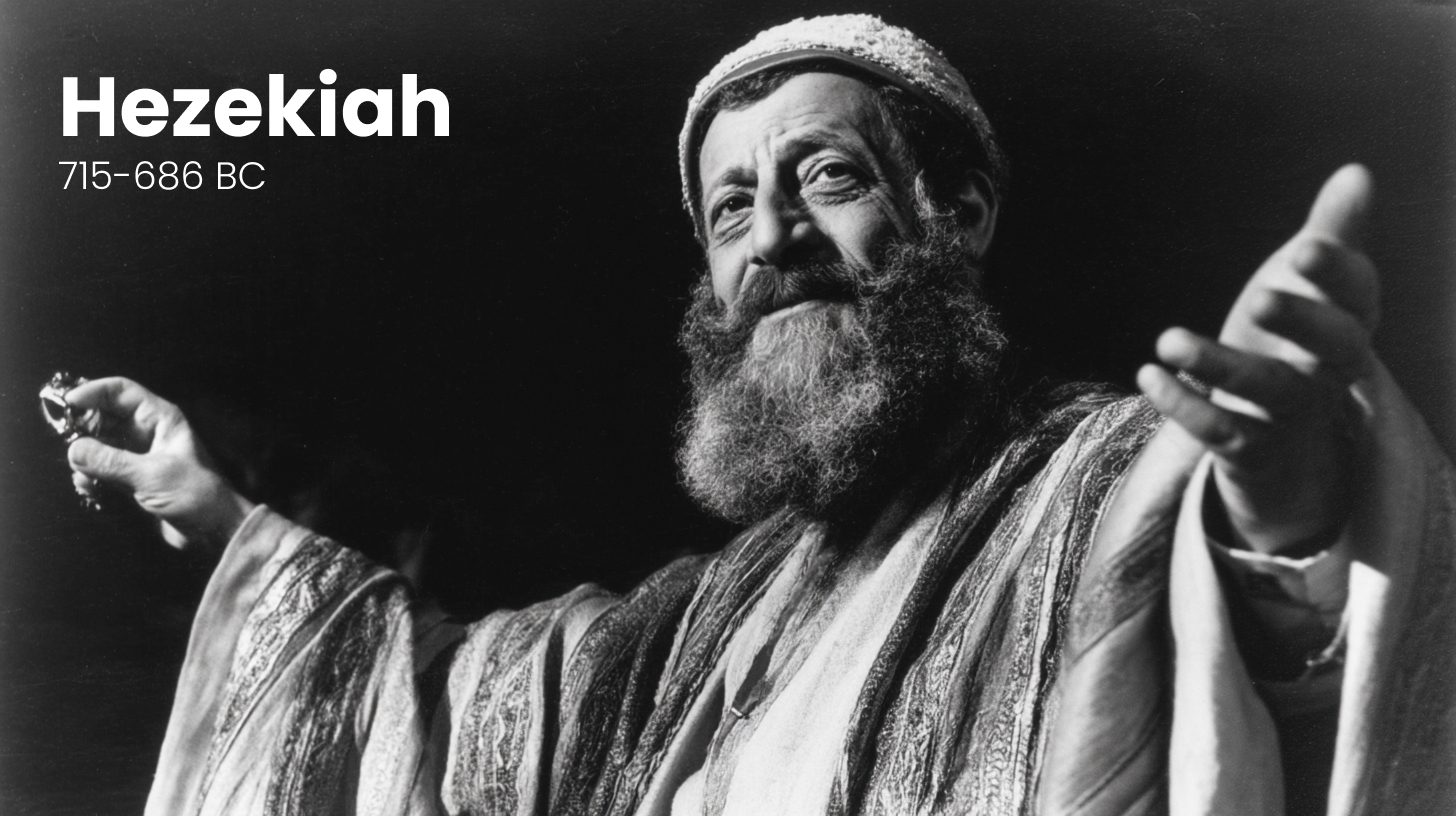
Hezekiah is around forty years old, fourteen years into his reign, when Isaiah walks in with a message that has no conditions attached to it. Put your house in order. You are going to die. You will not recover (2 Kings 20:1).
Hezekiah turns his face to the wall and prays. It is a short prayer, and it is about his record: remember how I have walked before you faithfully and with wholehearted devotion (2 Kings 20:3). Then he weeps bitterly.
Isaiah does not make it out of the middle court before God turns him around. I have heard your prayer. I have seen your tears. Fifteen years (2 Kings 20:4-6).
That is usually where this story gets told from, and it should be. A stated outcome undone by one man weeping at a wall. I have no interest in shrinking that.
But keep reading, because the failures the text lingers on all happen inside those fifteen years.
The Babylonians came because he got well. The delegation arrived with congratulations on his recovery, and he walked them through the whole treasury, and Isaiah told him what it would cost: all of it carried off to Babylon, and his own descendants with it, to serve in a foreign palace (2 Kings 20:17-18).
Hezekiah’s answer is the part I had to read twice. “The word of the LORD you have spoken is good.” Because he thought: there will be peace and security in my lifetime (2 Kings 20:19).
He heard that his grandchildren would be hauled off in chains and filed it under good news, because the dates worked out.
Manasseh was born in there too. He was twelve when Hezekiah died (2 Kings 21:1), which on a plain reading of the numbers puts his birth about three years into the extension. He went on to reign fifty-five years and take apart most of what his father built.
The Chronicler, who is never shy, names it exactly. Not “he sinned later.” This: “Hezekiah’s heart was proud and he did not respond to the kindness shown him” (2 Chronicles 32:25).
He does get the last word, and it’s a mercy. Hezekiah repented of the pride of his heart, and the judgment was held back for the rest of his life (2 Chronicles 32:26).
Real repentance. It just came after the tour.
I was thirty-five when a doctor told me I had months.
My prayers got very small after that, and very specific. Please let me live. That was the whole prayer. I was not asking for wisdom about the time or clarity about what I’d do with it. I was asking to have it.
It was granted.
And it arrived the way it arrived for Hezekiah. No handbook. Nobody sat me down afterward to explain what the extra years were for, or what I now owed, or how a person is supposed to carry something like that. I got the years and I got the same silence he got.
Which is why the Chronicler’s line is the one that gets me. He did not respond to the kindness shown him. That is not a failure I would have thought to watch for in myself. It doesn’t feel like a failure. It feels like going back to work.
I don’t have to imagine what Hezekiah prayed with his face to that wall. I know what I prayed with my face to mine. Same prayer.
The asking turned out to be the easy part.
I’ve had a lot of years since. The question I’m still working on is not whether I wanted them.