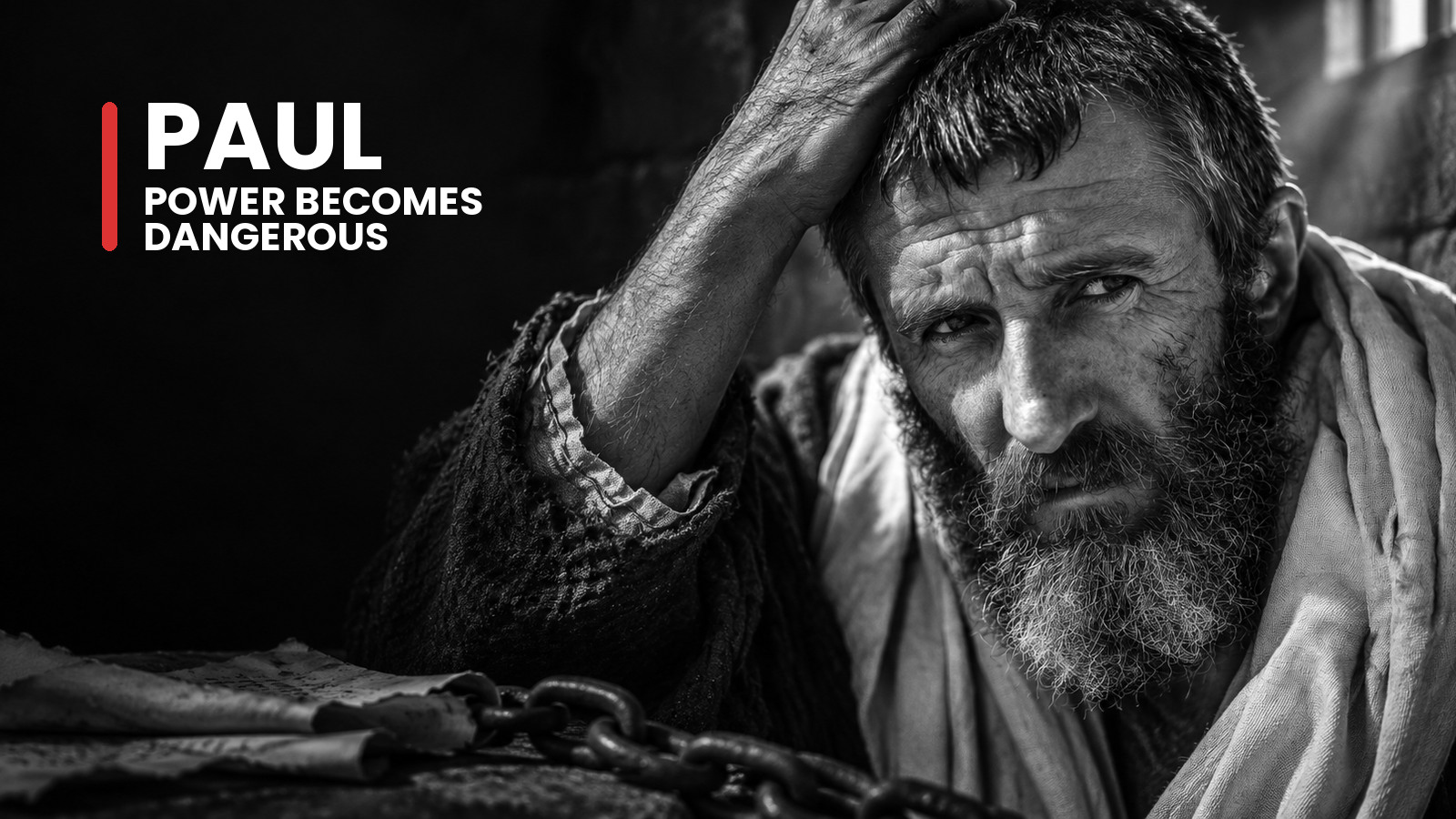

BIG IDEA
The thing we’re best at can become the thing that blinds us most.
Sometimes our greatest asset needs to be dismantled before we can truly lead.
BACKGROUND
Paul was a religious prodigy. Top of his class. Connected to power. He had every credential a leader could want. Then everything changed on a dusty road—and with it, our understanding of what real transformation requires.
STORY
He was hunting people.
Letters of authority in his bag. Chains ready for arrests. Saul—the man who would become Paul—traveled toward Damascus with murder on his mind (Acts 9:1-2).
This wasn’t some conflicted soul searching for meaning.
He was certain. Absolutely certain.
And that’s what made him dangerous.
Here’s what we’re discovering together: Certainty without humility is a weapon. The more competent we become, the more careful we need to be.
Paul had the resume. He later listed his credentials: perfect pedigree, elite education, flawless religious record (Philippians 3:4-6). By every measure, he was winning.
But winning at what?
The light knocked him down. The voice asked one question: “Why are you persecuting me?” (Acts 9:4).
Not: Why are you wrong?
Not: Why are you evil?
Just: Why are you fighting against what you claim to serve?
That question changes everything.
Part 4 of 5 · ProfileMeet Paul: the full profile →Character profilePaul spent three days blind. Think about that. The man who saw everything so clearly couldn’t see at all. He had to depend on others. He had to wait. He had to let go.
This is the pattern we keep finding in great leaders: Before they build, something has to break.
Years later, Paul wrote something stunning. All those credentials? He called them garbage (Philippians 3:8). Not because they were false. They were true. They just weren’t the point.
The persecutor became the apostle. The hunter became the hunted. The man who destroyed communities spent his life building them.
At the end, chained in a Roman prison, he wrote: “I have finished the race” (2 Timothy 4:7).
Not the race he started. A completely different one.
Maybe the question isn’t whether we’re running hard enough. Maybe it’s whether we’re running in the right direction. And whether we’re humble enough to change course when we discover we’re not.
Get it by email, free
One Bible character and one leadership lesson, every week.