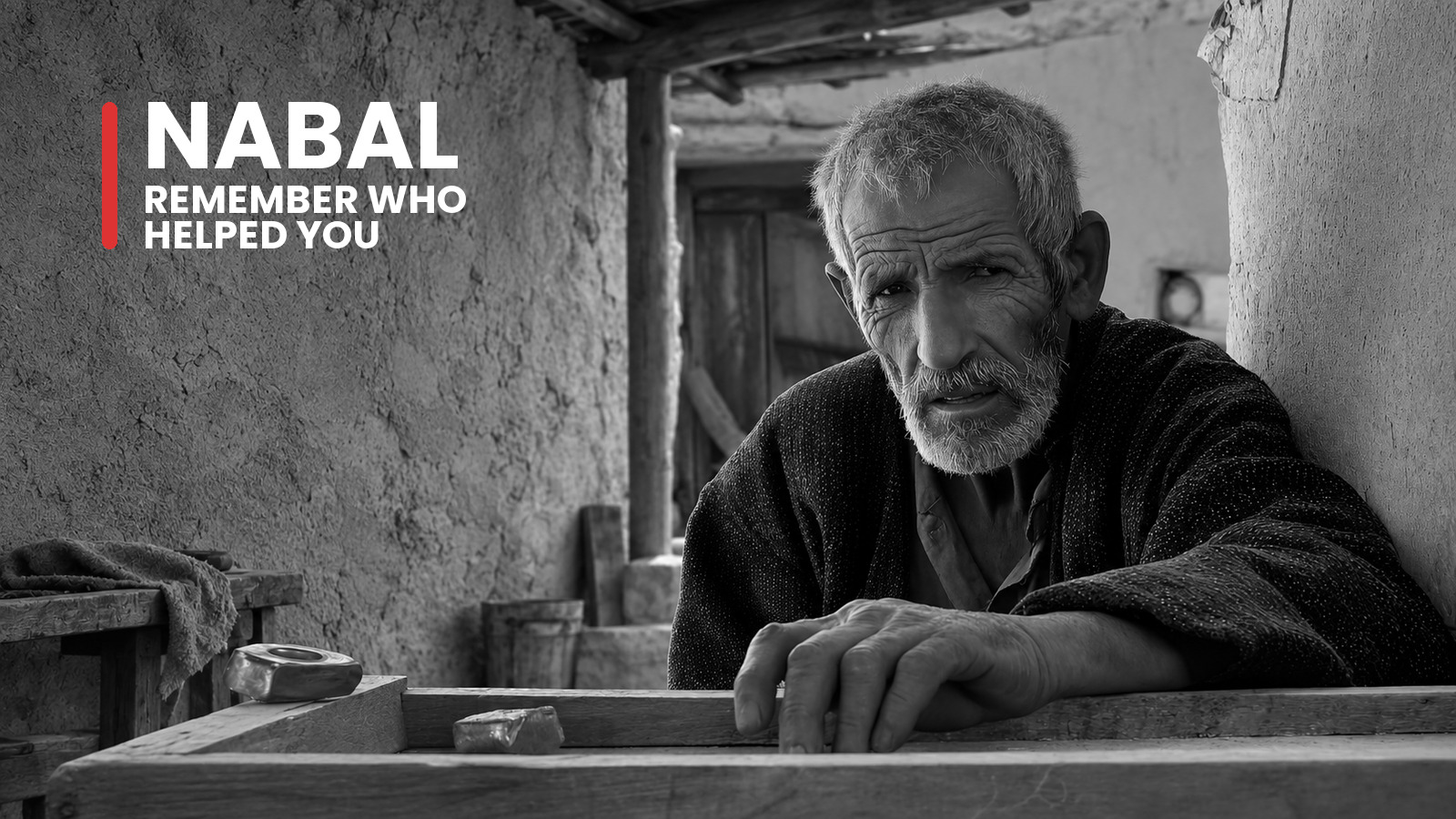

I want to notice the people whose daily work makes my life possible. A meal, a finished project, a safe place to sleep: someone helped make each of those happen. When I forget that help, I can start treating everything I have as something I produced alone.
Nabal (NAY-bul) was a wealthy livestock owner in ancient Judah. His sheep were being sheared at Carmel (KAR-mul), a town usually identified with a site about eight miles south-southeast of Hebron (HEE-brun), in today’s West Bank.
Part 5 of 5 · MapSee where this happened: Carmel in Nabal’s Story →Map of the places in the storyDavid, who would later become Israel’s king, was living in the wilderness with his followers. They had helped protect Nabal’s shepherds. At shearing time, David sent men to ask Nabal for food. He invited Nabal to check with his own workers about the help they had received (1 Samuel 25:4–8).
Nabal refused and insulted David. In his reply, he spoke of “my bread and water” and the meat prepared for his workers (1 Samuel 25:11, NIV). His answer made no room for the people who had helped keep his flocks safe.
David responded by preparing an armed attack. Nabal’s insult did not excuse that choice. People throughout the household were now in danger.
Part 2 of 5 · Gospel QuartetHear it sung: Remember Who Helped You ▶Gospel quartet song · plays hereOne servant went to Nabal’s wife, Abigail (AB-ih-gayl). He described the protection David’s men had given them. She gathered food, met David, and urged him to stop. David accepted her appeal and turned back (1 Samuel 25:14–35).
While she was preventing bloodshed, Nabal was holding a feast. He did not learn what had happened until morning. The account ends with his death about ten days later (1 Samuel 25:36–38).
I do not read this as a promise that every refusal will bring disaster. What stays with me is how much Nabal’s workers knew that his answer ignored. He had people nearby who could have helped him see the whole picture.
Before I decide that someone wants too much, I can ask what they have already contributed. Before I take credit, I can name the person who did the work. A thank-you becomes more useful when it is specific, and when fair treatment follows it.
I can still have limits. I cannot meet every request. But I want my answer to begin with an honest picture of what I have received. Remembering who helped me is one way to keep gratitude from becoming just a word.

Get it by email, free
One Bible character and one leadership lesson, every week.