Jim Collins
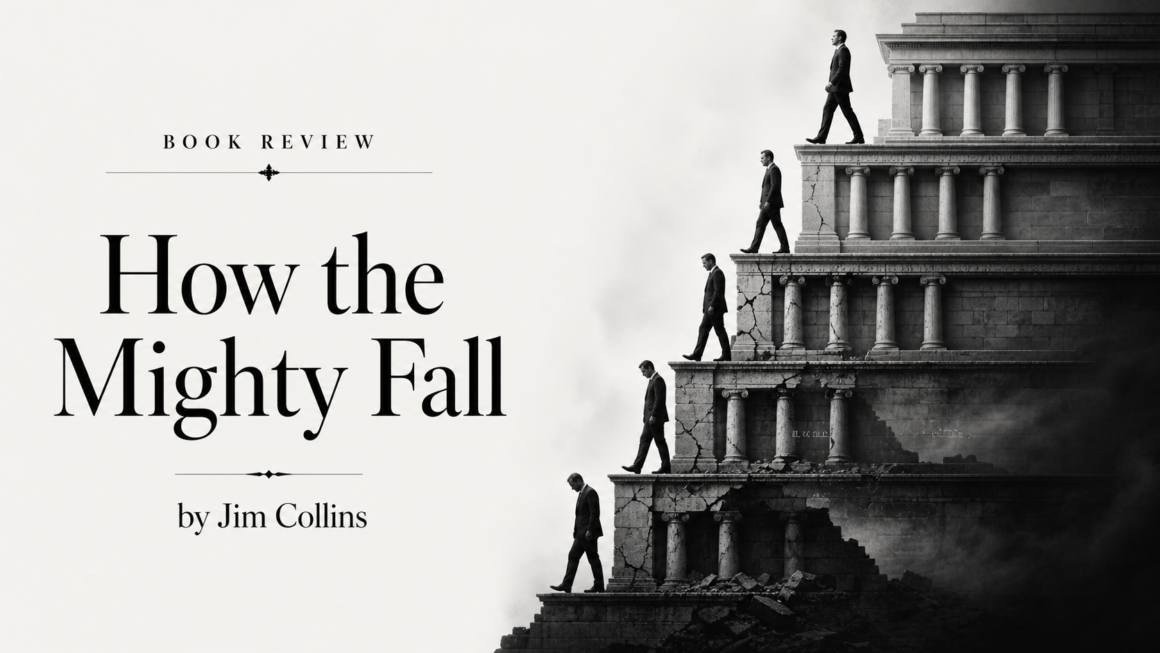
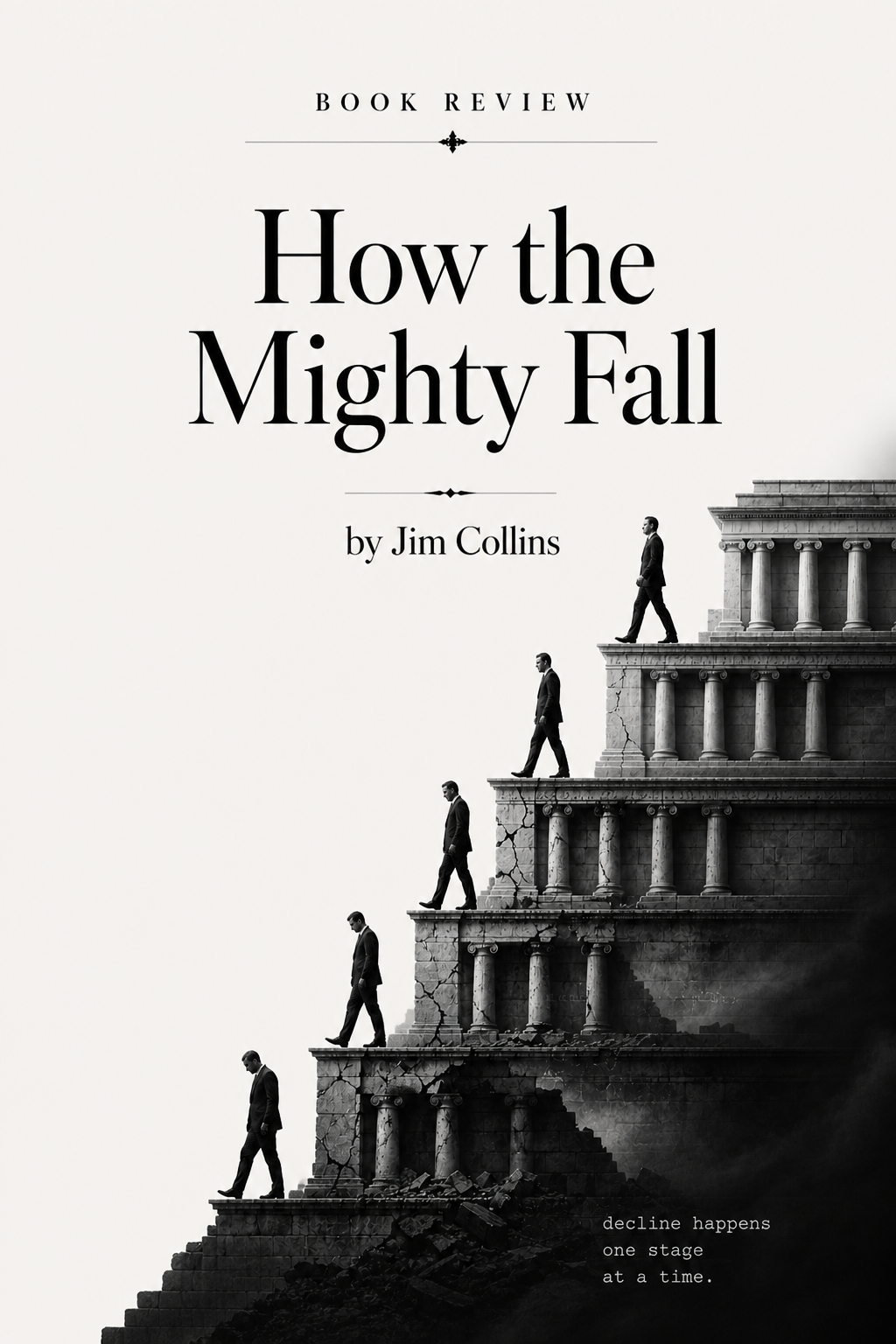
Jim Collins built a career explaining how great companies get great. Then he wrote the book I didn’t expect from him — the one about how they die. And the most disturbing thing in it is when the dying starts. Not at the bottom. At the top.
Collins lays decline out in five stages, and the order is the whole point.
Stage One is Hubris Born of Success. The wins pile up, and somewhere in the pile the people running the place stop asking why it’s working. Success stops being something they did and becomes something they’re owed. Stage Two, Undisciplined Pursuit of More — more markets, more growth, more everything, past the point of what they actually do well. Stage Three, Denial of Risk and Peril: the warning signs show up and get explained away. Stage Four, Grasping for Salvation — the panic move, the savior CEO, the bet-the-company pivot. Stage Five is Capitulation. The lights go off.
What I keep turning over is Stage One. The rot doesn’t begin with a bad quarter. It begins with a good one — with a company so strong on the outside that no one thinks to check the inside. Collins puts it plainly: an institution can be sick within and still look powerful from the street. Decline sneaks up precisely because everything looks fine.
That’s the sentence that got me, because it’s the reverse of how I’d have drawn it. I’d have said the strong are safe and the weak are at risk. Collins says the strength is the risk — that the very success which built the place quietly teaches the people inside to stop paying attention. The higher they climb, the less they think they need to look down.
The book is about corporations — Motorola, Circuit City, Bank of America, a dozen giants that looked untouchable right up until they weren’t. But I didn’t read it as a business book. I read it as a book about how confidence turns into blindness, and how that turn is invisible to the person making it. Stage One doesn’t get scheduled. It arrives disguised as a winning streak.
What keeps the whole thing from being grim is Collins’s other finding. The stages are a diagnosis, not a sentence. He’s blunt that as long as you’re not all the way into Stage Five, you’re still in the game, and the road back is the same discipline that carried you up the mountain in the first place. Decline is mostly self-inflicted — which sounds bleak until you catch the flip side: if you did it to yourself, you have some say in undoing it.
So the worth of the book isn’t the doom. It’s the early map. Stage One and Stage Two feel like triumph from the inside; that’s exactly why they’re the ones to watch for. By Stage Four the crisis is obvious and the options are gone. The whole edge is in catching it while things still look good — while catching it feels unnecessary.
That’s a hard discipline, because it asks you to distrust your own winning streak. To treat a run of success as the moment to look harder, not the moment to coast. Collins spends a career’s worth of research to land somewhere almost unfair in its simplicity: the danger isn’t out there waiting for you to weaken. It’s in here, arriving the day you decide you’ve made it.
Read it when things are going well. That’s when it’s useful — and that’s the one time you won’t think you need it.