Richard E. Simmons III
A note up front: this one isn’t a book. It’s an essay — part of Richard E. Simmons III’s Reliable Truth writing — short enough to read in one sitting. I’m reviewing it anyway, because it does something the thick books on this shelf mostly don’t. It watches faith leave a person while they’re standing still.
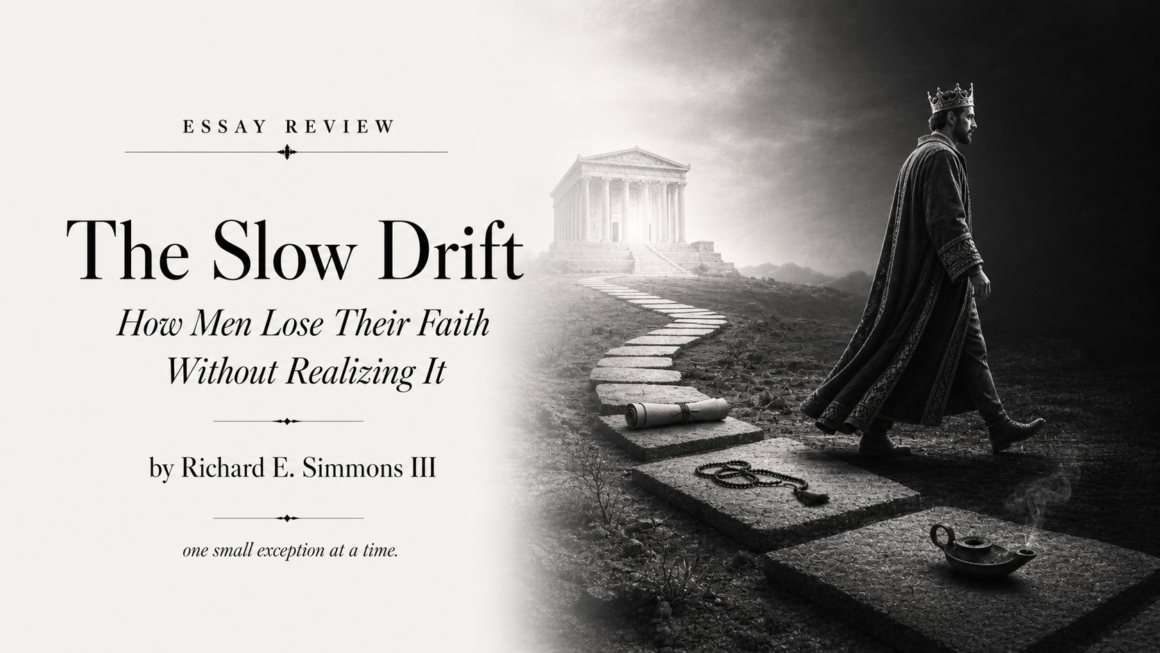
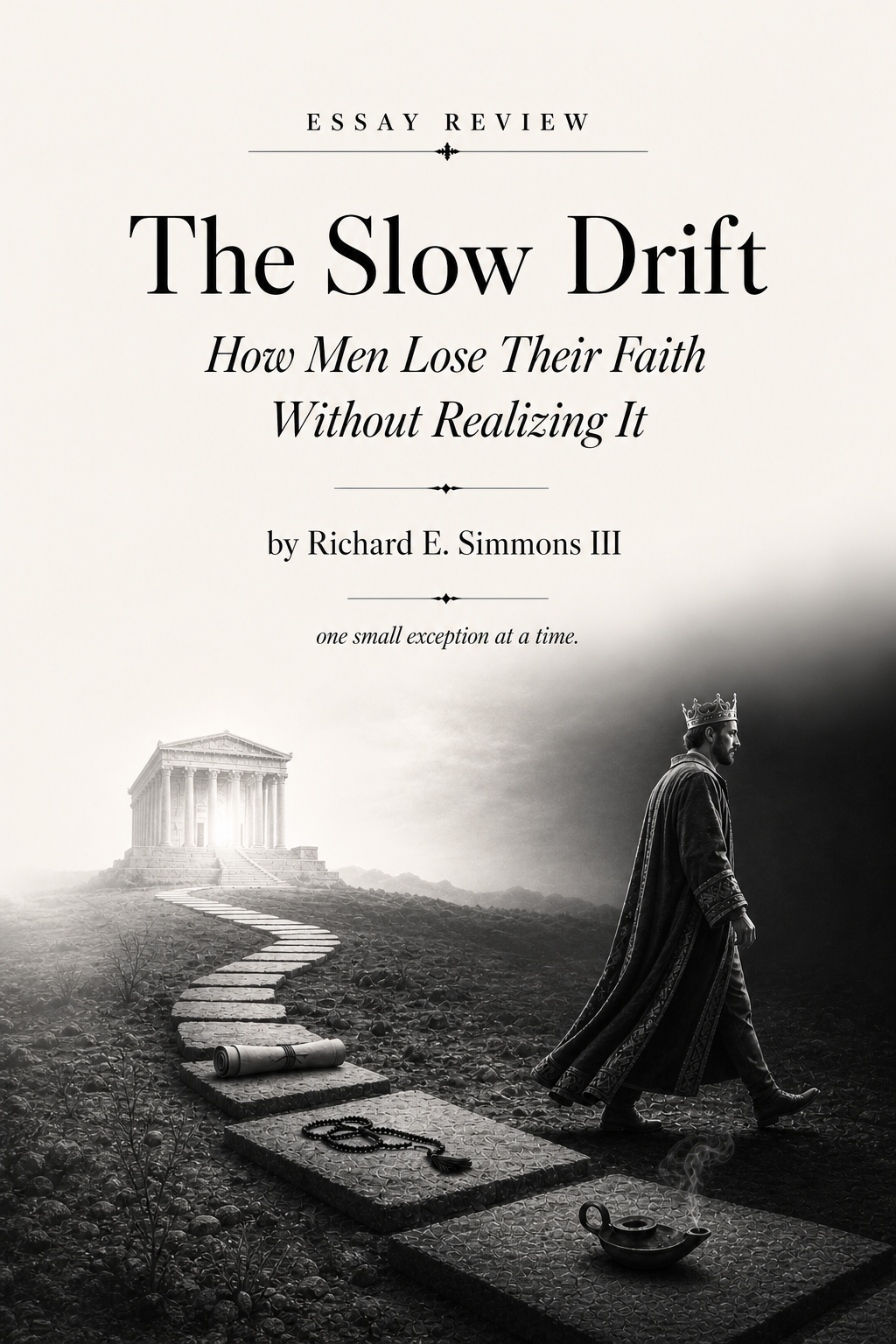
Simmons builds the whole piece on one line from Hebrews: “pay the most careful attention… so that we do not drift away.” Drift is the word that carries it. Not a rejection. Not a crisis of doubt with a date on it. A boat that slips its mooring and moves because nobody’s rowing — because rowing was the thing that quietly stopped happening.
That reframe is the value of the essay for me. I’d always pictured lost faith as a decision — an argument someone lost, a hurt they couldn’t forgive, a door slammed on the way out. Simmons says the more common story has no door and no slam. It’s neglect. The prayer that gets shorter, then optional, then forgotten. The Scripture crowded out by a screen. The Sunday that becomes every-other, then holidays, then a photograph of something you used to be.
He names five currents that pull the boat: distraction crowding out devotion; comfort softening into complacency; the culture’s voice slowly out-shouting the one you claim to follow; isolation with no one close enough to notice the drift; and a hollowing-out where the outside stays religious while the inside quietly empties. What struck me is that not one of them requires a bad decision. They only require an absence of decisions. You don’t have to walk away. You just have to stop walking toward.
This is where it lands next to the harder-headed books I’ve been reading. The psychologists say awareness of a flaw doesn’t make me immune to it. Simmons describes the same trap from inside a life of faith: knowing the drift exists, being able to preach against it, doesn’t anchor the boat. The man most sure he could never drift is often the one who stopped checking the rope. I’d assumed confidence was its own kind of mooring. It isn’t.
The remedy Simmons offers is unglamorous, and I think that’s the point. No breakthrough, no mountaintop. Just discipline that doesn’t depend on how I feel that morning — a fixed habit of prayer and Scripture, people close enough to ask hard questions, and the deliberate slowing-down it takes to hear anything over the noise. He’s clear that occasional passion won’t hold a life together. Only intention does.
I’ll be honest about what the essay isn’t. It’s not deeply argued or richly sourced; it’s a pastor’s warning, not a case built brick by brick. If you want the airtight version, you’ll go elsewhere. But a warning doesn’t have to be long to be true, and this one names a thing I can feel and rarely say out loud.
You can read the essay free on Simmons’s site, and I’d start there. If it lands and you want more of his thinking, his best-known book is the place to go: The True Measure of a Man.
The sentence I keep is the one sitting under all five currents: faith isn’t usually lost through sudden collapse — it erodes through neglect. Which means the danger isn’t that I’ll decide to quit. It’s that I’ll drift, slowly, while assuming I’m still anchored — right up until I look at the far shore and can’t remember when it got so small.