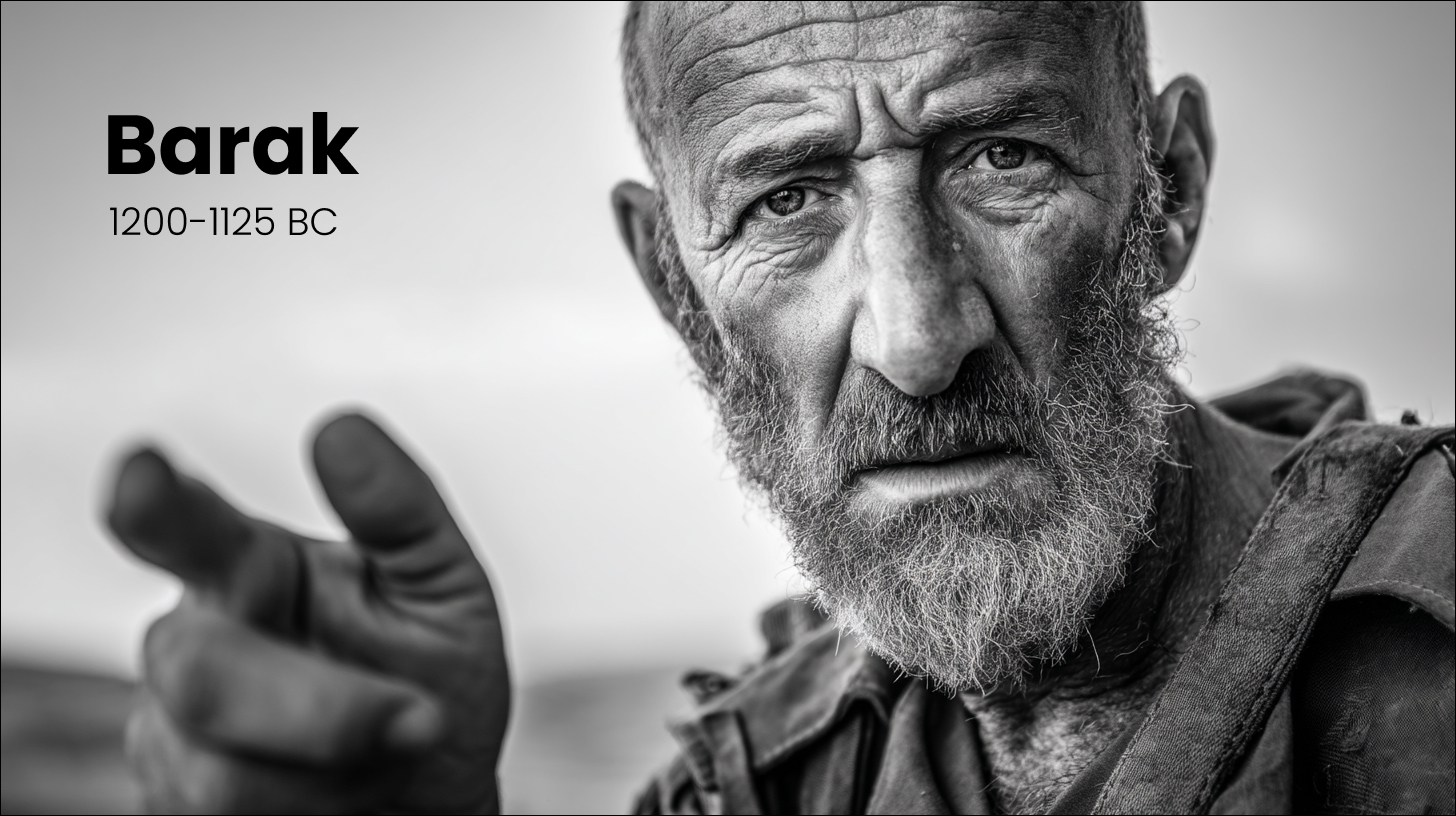
BIG IDEA
The strongest move isn’t always taking charge.
Sometimes winning means choosing who to follow.
We’ve been sold a myth that leaders never ask for help.
BACKGROUND
Around 1200 BC — about when Brad Pitt’s Achilles was sacking Troy on the coast of modern Turkey, 700 miles north — a general named Barak commanded the army of Israel. His enemy fielded 900 iron chariots, the tanks of the ancient world. His story is in Judges 4-5. He’s named in Hebrews 11:32 among history’s heroes of faith.
STORY
A two-star general. Ten thousand troops. An enemy with iron chariots.
And he refused to march.
Not without Deborah, a prophetess who heard from God clearly. Barak could swing a sword. Deborah could hear the signal. He wanted both on the battlefield. (Judges 4:8)
The critics called it cowardice.
The critics were wrong.
We’re told leadership means having all the answers. Being the smartest in the room. Needing no one.
Barak knew better. He also knew the cost. Deborah warned him the glory would go to a woman named Jael, who would finish the enemy commander with a tent peg. (Judges 4:9)
He took the deal anyway.
Part 4 of 5 · ProfileMeet Barak: the full profile →Character profileThe mission mattered more than the credit.
The result? A storm flooded the river. The chariots bogged down in the mud. (Judges 5:21) The enemy was finished. The victory song was sung by two. (Judges 5:1)
Maybe leadership isn’t about being strong enough to do it alone.
Maybe it’s about being wise enough to know when not to.
Get it by email, free
One Bible character and one leadership lesson, every week.