Daniel Kahneman
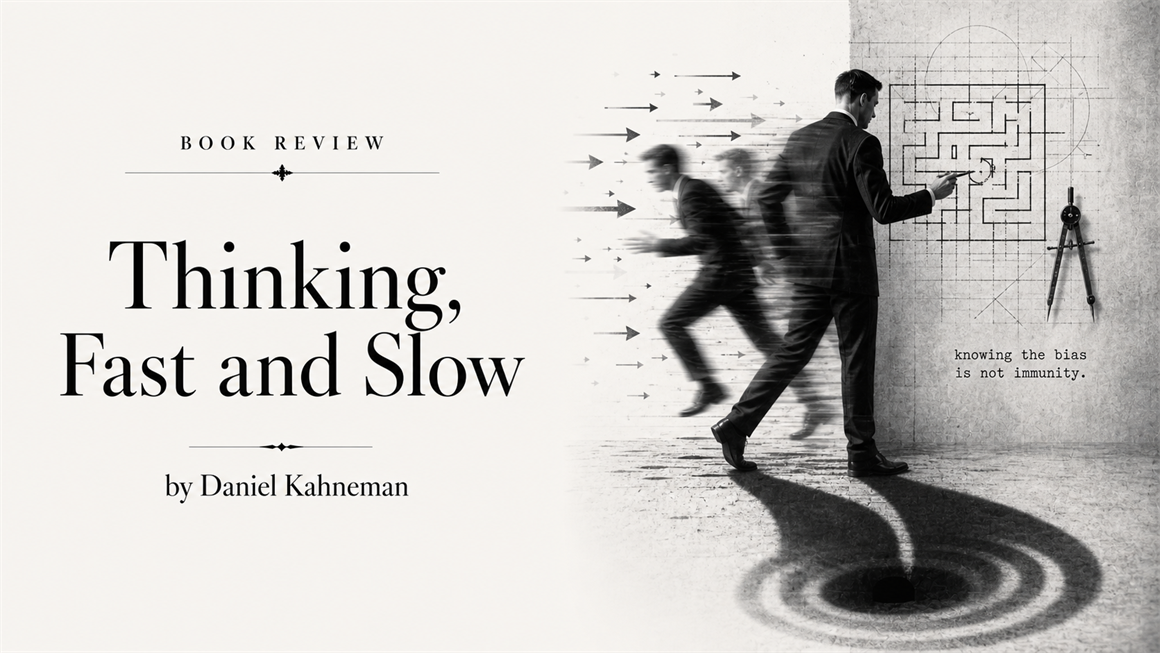
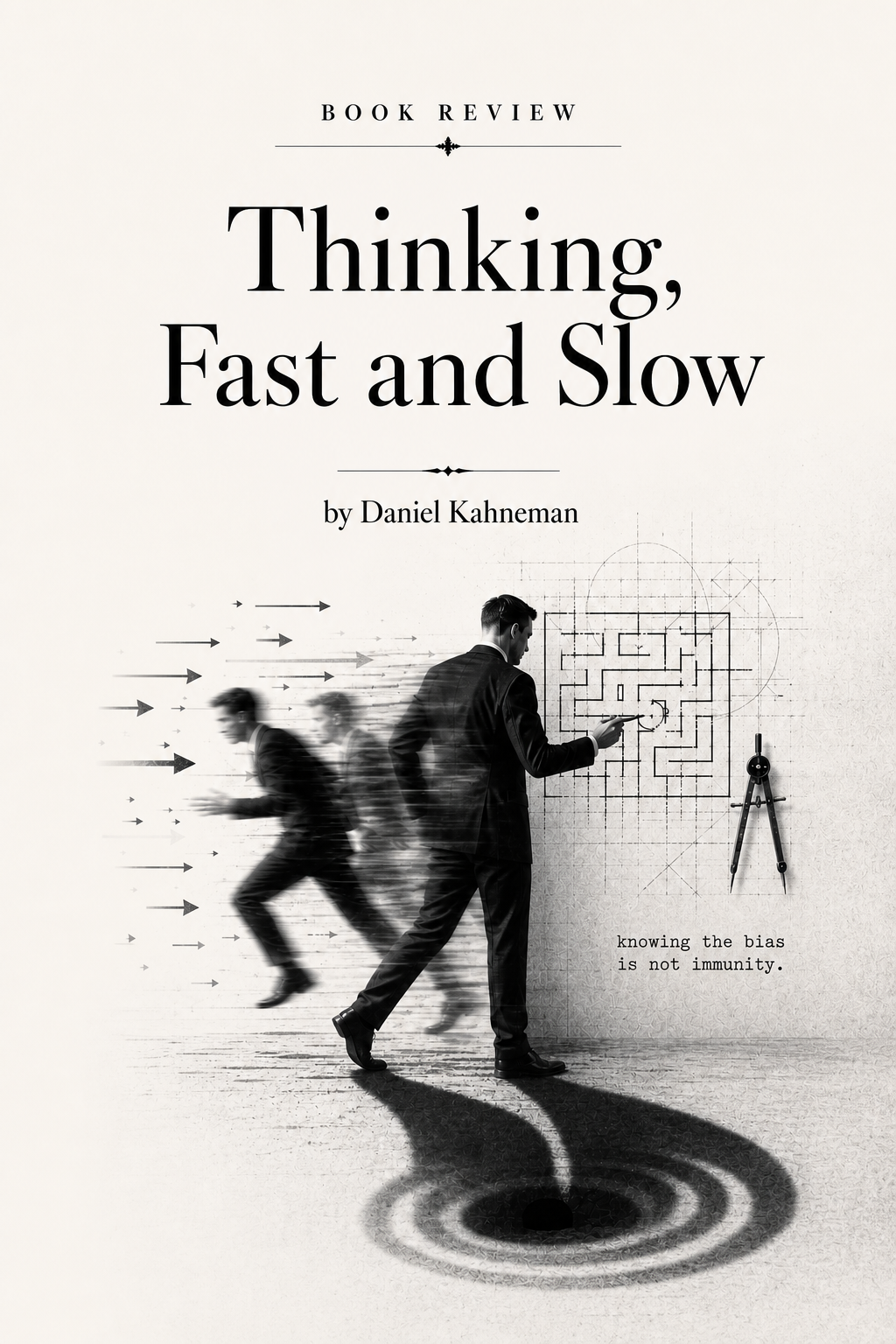
Daniel Kahneman won a Nobel Prize for figuring out how human judgment goes wrong. He spent fifty years mapping the ways the mind misfires. And near the end of this book he admits, flatly, that all of that work barely improved his own thinking. That confession is the reason I trust the rest of it.
The book’s spine is two characters he calls System 1 and System 2. System 1 is fast — it reads the room, finishes my sentences, jumps to the answer before I’ve finished asking the question. System 2 is slow — it does the long division, weighs the options, checks the work. System 1 runs the show almost all the time, because thinking hard is expensive and the fast system is usually good enough. The trouble starts when “usually” fails and the fast answer feels exactly as certain as a right one.
From there Kahneman walks through the specific ways System 1 fools me. Anchoring: drop any number in front of me and my estimate drifts toward it, even a number I know is random. Availability: whatever comes to mind easily feels more common than it actually is. Loss aversion: losing a hundred dollars stings more than winning a hundred pleases, which quietly warps every risk I weigh. And the one that finally named something I’d felt for years — WYSIATI, “what you see is all there is.” My mind builds a confident story out of the scraps in front of it and skips the scraps it can’t see.
I could feel myself doing the reader’s usual move as I read: cataloguing which of these traps other people fall into. Kahneman saw that coming. The book is unusually honest that spotting the bias is easy from the outside and nearly impossible from the inside, in the moment, when the bias is mine.
Which brings me to the confession. Kahneman writes that after decades of study, his intuitive thinking is about as prone to overconfidence and bad prediction as it ever was. The knowledge didn’t install a filter. What improved, he says, is only his ability to name the situations where he’s likely to be wrong — to slow down and call in System 2 when the stakes are high enough to justify the effort.
That’s a smaller promise than the one I wanted. I came hoping the book would upgrade me. What it offers instead is a vocabulary for my own errors and a single habit: notice the terrain where mistakes cluster, and spend the effort there. The bias doesn’t leave. I just get a little better at guessing when it’s in the room.
It’s a long book, and parts of it read like the lab reports they grew from. Some of the priming studies it leans on have wobbled in the years since it came out, and it’s worth reading with that in mind. But the core — two systems, a catalog of predictable errors, and an author too rigorous to exempt himself — has held up better than almost anything else written about how the mind works.
If you want the foundation under every other book on thinking, this is it: Thinking, Fast and Slow. Fair warning — it won’t make you a clearer thinker by the last page. The man who wrote it is proof of that, and says so plainly. What it will do is hand you the names for the ways you were already going wrong, which turns out to be where the real work starts.