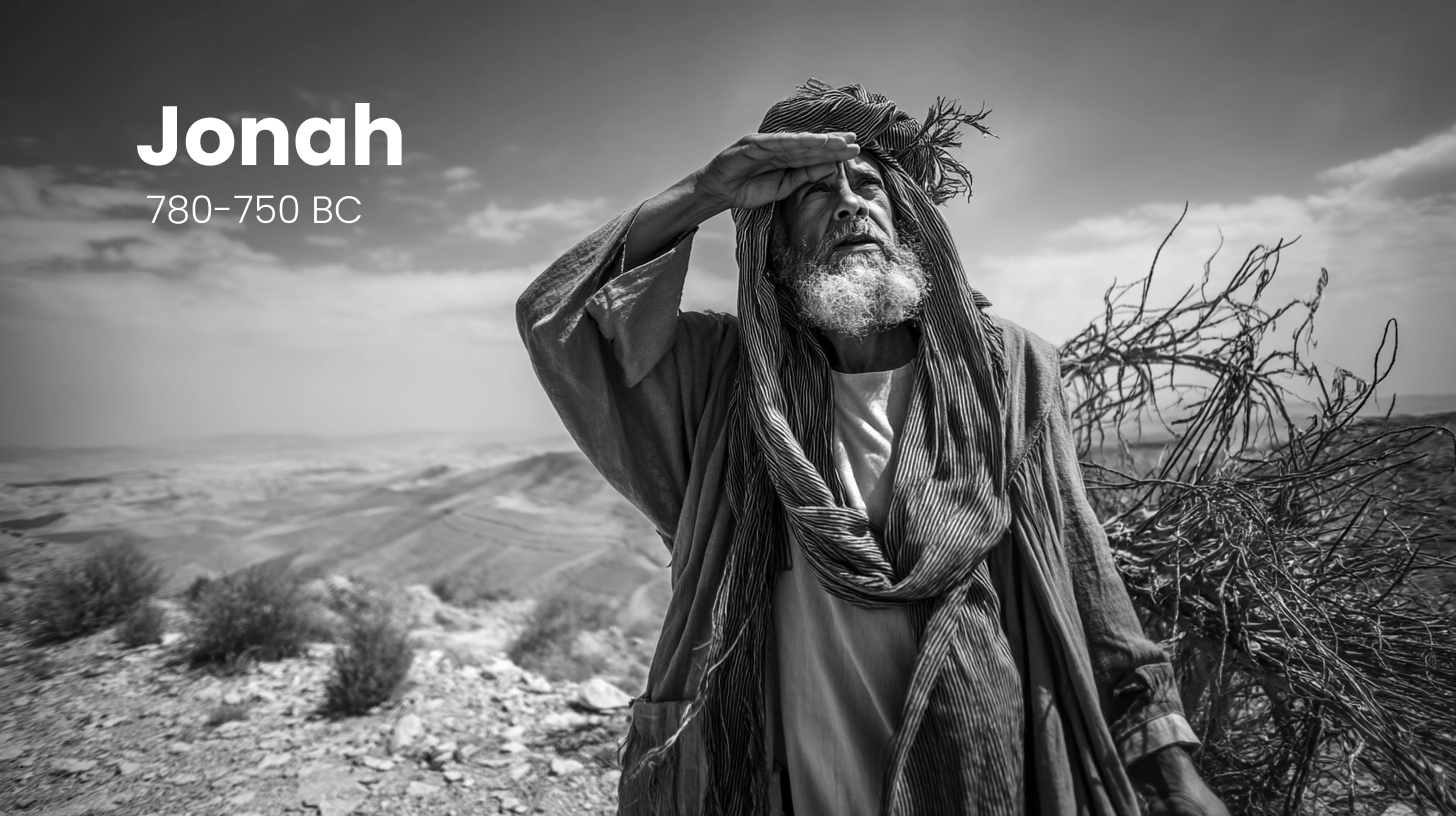
BIG IDEA
Sometimes we run from the very thing that would set us free.
We avoid the hard conversation. We dodge the assignment. We resist the mercy that could heal us.
Not because we don’t understand it.
Because we do.
The truth is, running rarely solves anything. It just relocates the problem.
BACKGROUND
Jonah was a prophet in ancient Israel around 780 BC. His job was to say what God said, even when it hurts.
What makes his story remarkable isn’t that he ran from danger.
He ran from mercy.
More specifically, he ran from the possibility that God might show mercy to people Jonah hated (Jonah 1:1-3).
That changes the whole story.
STORY
Here’s a man who got exactly what he wanted—and hated the outcome.
God told Jonah to go to Nineveh.
Nineveh was the enemy. Violent. Oppressive. The kind of place people wanted judged, not forgiven.
So Jonah went the other way (Jonah 1:3).
We know what happened next. Storm. Ship. Sailors terrified. Jonah overboard. Big fish…really big fish.
Three days in the dark (Jonah 1:17).
Eventually, Jonah obeyed. He went to Nineveh. He preached the warning. And the city repented (Jonah 3:5-10).
The mission worked.
And Jonah was furious.
“I knew it,” he told God. “I knew that you are gracious and compassionate, slow to anger and abounding in love” (Jonah 4:2).
Don’t miss this.
Jonah did not run because God was too harsh.
He ran because God was too merciful.
He knew exactly who God was.
He just did not want God to be that way for them.
That is what makes Jonah so exposing.
He wanted grace for himself and judgment for his enemies.
And if we are honest, so do we.
Jonah sat outside the city, hoping God might still destroy it (Jonah 4:5).
Then God gave him a plant for shade. Jonah loved the plant.
God took the plant away. Jonah wanted to die (Jonah 4:6-8).
A prophet more upset about losing a plant than losing a city.
More troubled by discomfort than by 120,000 human beings.
Then God asked the question that ends the book: You care about a plant you did nothing to grow. Shouldn’t I care about 120,000 people in Nineveh? (Jonah 4:10-11, paraphrased)
And that is where the story stops.
No resolution. No cleanup. Just a question hanging in the air.
Because the point is not Jonah’s answer.
It is ours.
Leadership is not just about doing the assignment.
It is about letting God deal with your heart as you do.
Jonah obeyed. But obedience alone did not make him surrender.
He delivered the message while resenting the mercy behind it.
That is the danger.
We can do the right thing with the wrong spirit.
We can say what is true and still be angry when grace lands on people we do not think deserve it.
The real question is not whether we will obey.
The real question is whether we can rejoice when God is kinder than we wanted Him to be.
Especially toward them.