BIG IDEA
We have two Christmas stories in the Bible. Not contradictory accounts. Two windows into the same event, written for different people standing in different places. That difference turns out to be the point.
BACKGROUND
Matthew wrote for Jewish readers. Luke wrote for a Greek named Theophilus. Same birth. Same Savior. Different doorways into the meaning.
STORY
Matthew gives us a genealogy. Wise men from the East. A paranoid king. A flight to Egypt. Prophecy fulfilled at every turn. His audience needed to see Jesus in the line of Abraham and David.
Luke gives us angels appearing to shepherds. A manger because there was no room. An old man named Simeon. A prophetess named Anna. The poor receiving the first announcement. His audience needed to know this Savior was for everyone.
There’s a temptation to flatten this. To harmonize the accounts into one seamless narrative and miss what each writer was doing.
Matthew and Luke weren’t stenographers. They were interpreters.
They took the same truth and made it accessible. They asked: What does this mean for this person, in this moment?
This is what leaders learn to do.
Purpose doesn’t change. But how we communicate it must.
A mission statement is not a translation. That’s transmission—important, but incomplete. Translation asks different questions: What matters to this person? What framework do they already have? What language will carry this truth into their world?
But there’s a deeper layer here.
The Christmas story doesn’t just illustrate translation. It is the ultimate translation.
The Incarnation is God translating Himself.
The infinite became finite. The Word became flesh (John 1:14). Not because God’s nature changed. Because love moves toward understanding.
He didn’t send a memo from heaven. He came as a baby—dependent, vulnerable, human. Not because it was efficient. Because it was the only way we could truly receive Him.
This is the pattern.
You don’t throw truth at people and hope it lands. You learn their language. You enter their world. You translate into terms they can hold.
Matthew knew his readers. Luke knew his. And they told the same story differently—faithfully.
The manger was not a retreat from glory. It was the clearest communication of it.
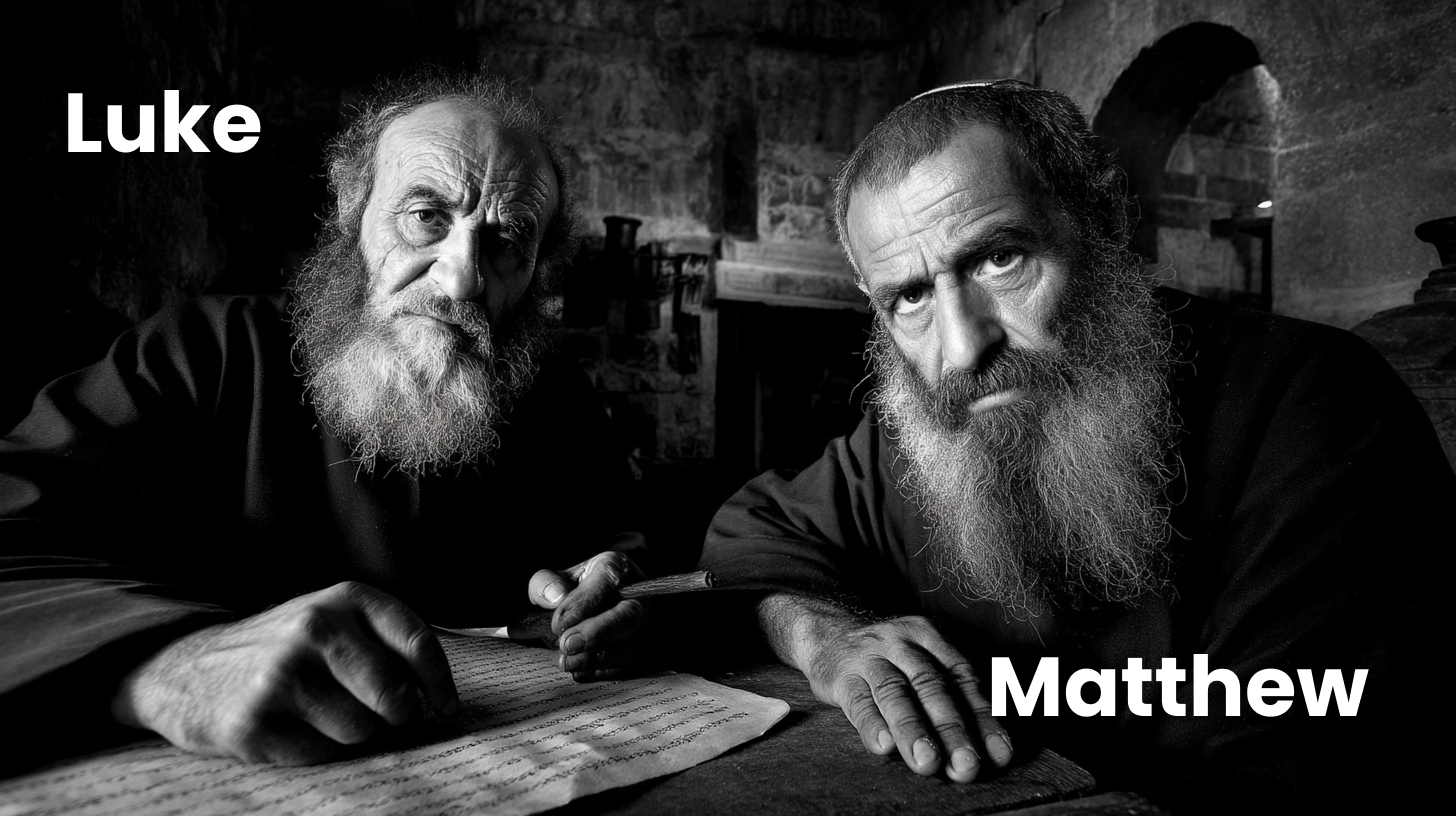
P.S., There is no historical evidence one way or the other that Luke and Matthew ever met. I put them together in the photo because it helped me tell this story.