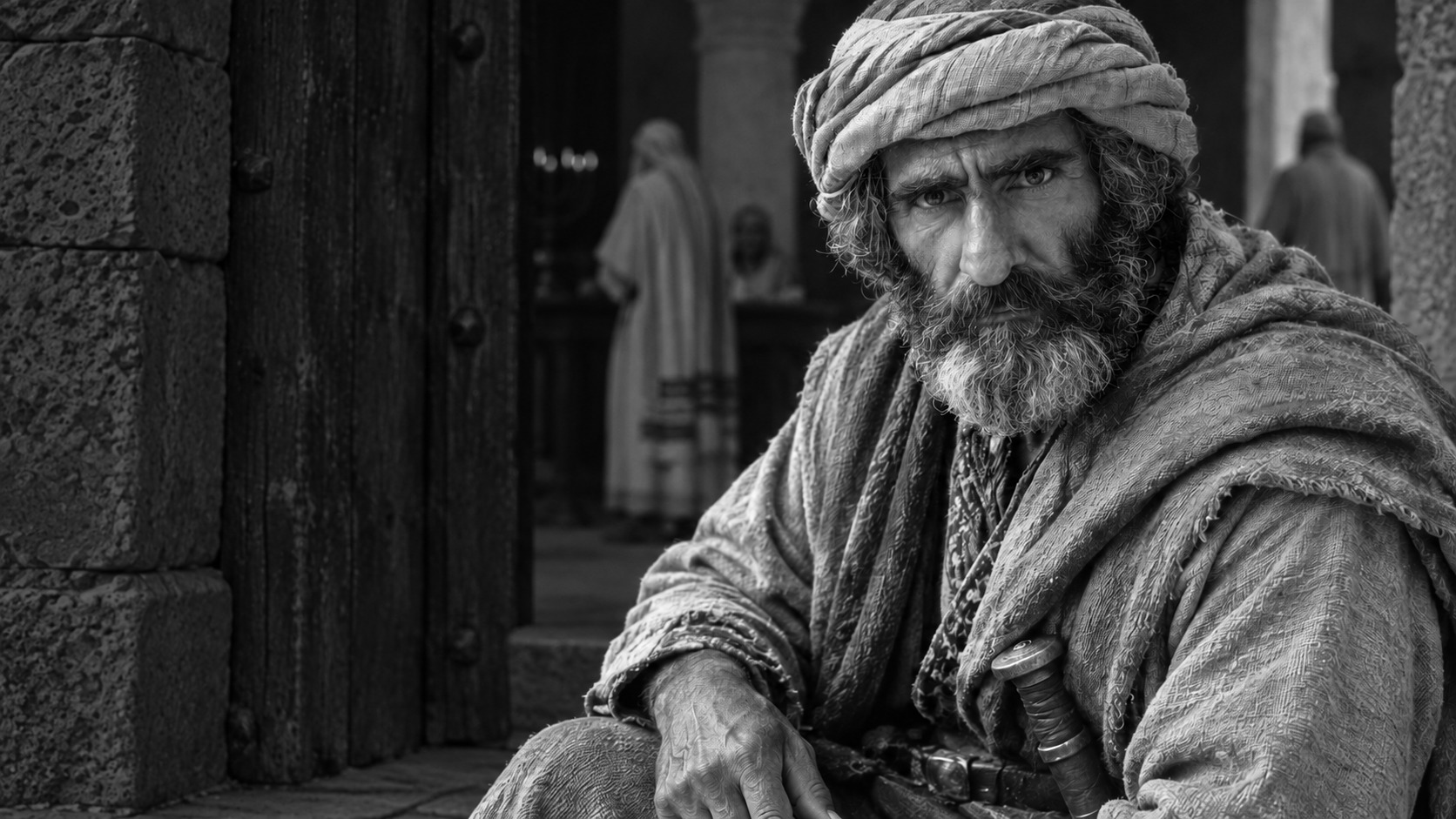
Doeg the Edomite (DOH-g) was a servant of King Saul and the chief shepherd responsible for the king’s herds. His story appears in 1 Samuel 21–22.
Birth year: Unknown.
Death year: Unknown.
Active during: Late in Saul’s reign, near the end of the eleventh century BC in a commonly used chronology. Saul is often placed about 1020–1000 BC, but the precise chronology is debated. This is an active period, not Doeg’s lifespan. BC means years before the traditional date of Jesus’ birth.
Origin: Edomite; his hometown and family are not recorded.
Role: Saul’s servant and chief shepherd.
Main passages: 1 Samuel 21:1–9; 22:6–23; Psalm 52 title.
An Edomite in Saul’s service
Edom lay mainly southeast of Judah, in territory associated today with southern Jordan and parts of the Arabah. The Bible calls Doeg an Edomite but does not say where he was born, how he entered Saul’s service, or whether he had a family. His office placed him over the king’s shepherds or herds.
What he saw at Nob
Doeg was present at the priestly town of Nob when the fugitive David asked Ahimelek for food and a weapon. Ahimelek gave David consecrated bread and the sword of Goliath. The text says Doeg was “detained before the Lord” but does not explain why (1 Samuel 21:1–9).
His report to Saul
When Saul complained that his officials were hiding David’s movements, Doeg reported the meeting at Nob. Saul summoned Ahimelek and the other priests. Ahimelek said he had understood David to be a trusted royal servant and knew nothing about his flight (1 Samuel 22:6–15).
The killing of the priests
Saul ordered his guards to kill the priests, but they refused. Saul then ordered Doeg to act. Doeg killed eighty-five priests and attacked the town of Nob. Abiathar, one of Ahimelek’s sons, escaped to David (1 Samuel 22:16–23).
Later life and limits
The Bible gives no secure account of Doeg’s later life or death. The title of Psalm 52 connects the psalm with his report to Saul, but it adds no biography. The portrait is a plausible historical illustration, not a known likeness.
The date comes from Doeg’s place in the story of David fleeing Saul, not from a recorded birth or death year. The broad 1020–1000 BC range belongs to Saul’s reign in one commonly used reconstruction; other chronologies differ.
Explore the proposed region of Nob on a modern map.
Read further
1 Samuel 21–22, NIV; BiblicalTraining: Doeg; Fordham Ancient History Sourcebook: Saul and David chronology; Encyclopedia of the Bible: Nob; Research summary on the possible location of biblical Nob.