Manasseh (man-ASS-eh) was a king of Judah, the southern kingdom centered on Jerusalem. The Bible records both the serious harm he caused and, in Chronicles, his later repentance. This is King Manasseh, not Joseph’s much earlier son of the same name or the tribe named after that son.
Birth: Approximately 708–699 BC, depending on whether an early co-regency or a later sole accession is used. This estimate is derived from his stated age of twelve at accession.
Death: Approximately 643–642 BC in commonly used chronologies.
Active during: The late eighth and seventh centuries BC. Some chronologies begin a shared rule about 697/696 BC; others date his sole reign from about 687/686 BC. These are chronology estimates, not dates stated directly in Scripture. BC means “before Christ”; BCE refers to the same years.
Role: King of Judah.
Main passages: 2 Kings 21:1–18; 2 Chronicles 33:1–20.
Family and kingdom
His father was King Hezekiah (heh-zeh-KYE-uh). Manasseh was followed as king by his son Amon. Judah lived under the shadow of the powerful Assyrian empire. Jerusalem was his capital; Chronicles also places a period of his captivity in Babylon, in modern Iraq.
What the accounts say
Manasseh promoted worship of other gods, placed their altars in the Lord’s temple, and sacrificed his children. Kings also holds him responsible for many innocent deaths (2 Kings 21:3–16; 2 Chronicles 33:3–9).
Chronicles reports that Assyrian commanders carried him to Babylon as a prisoner. There he humbled himself and prayed. After his return to Jerusalem, he removed the idols and altars he had installed, restored the Lord’s altar, and strengthened the city’s defenses. The people’s practices did not all change at once (2 Chronicles 33:10–17).
History and uncertainty
Assyrian inscriptions name Manasseh as a ruler of Judah who paid tribute. That evidence should be distinguished from the biblical account of his captivity and repentance. Kings does not narrate that change of heart; Chronicles does. Exact dates for the captivity and return remain uncertain. His later reforms do not erase the violence recorded in Kings.
Second Kings 21:1 says he was twelve when he became king and reigned fifty-five years. Combining that age with the competing accession chronologies produces an approximate birth range of 708–699 BC. His son’s succession after his death places the end of his life with the end of the reign, around 643–642 BC in the commonly used reconstructions.
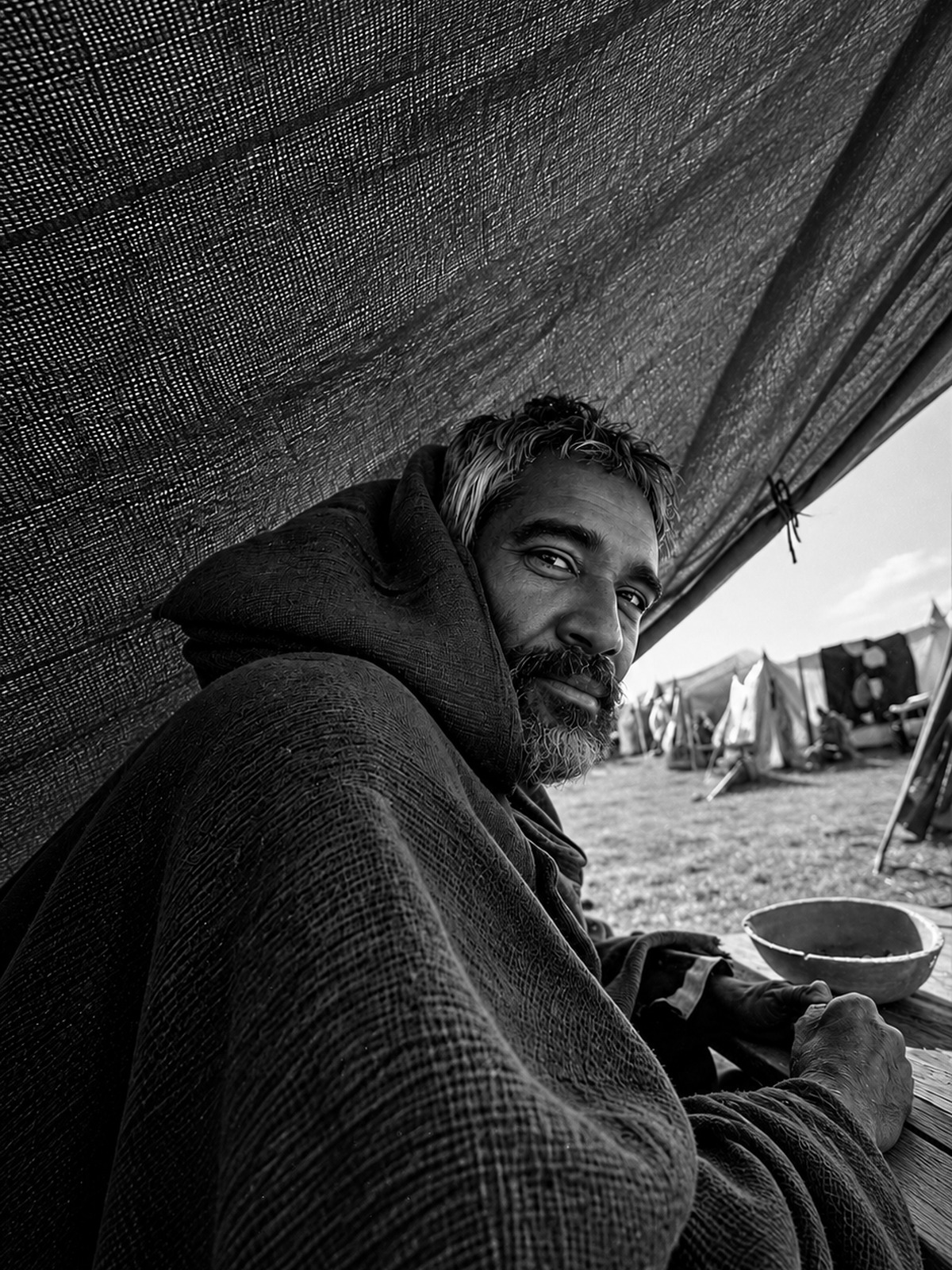
The image is an imagined historical portrait. His exact appearance is unknown. Explore Babylon’s location and the map notes.
Read further
2 Kings 21, NIV; 2 Chronicles 33, NIV; BiblicalTraining: Manasseh; Getty: Manasseh, King of Judah.