BIG IDEA
The hardest leadership moment isn’t starting something new. It’s letting go of what used to work. We don’t get to pick when the world changes—only how we respond when it does.
BACKGROUND
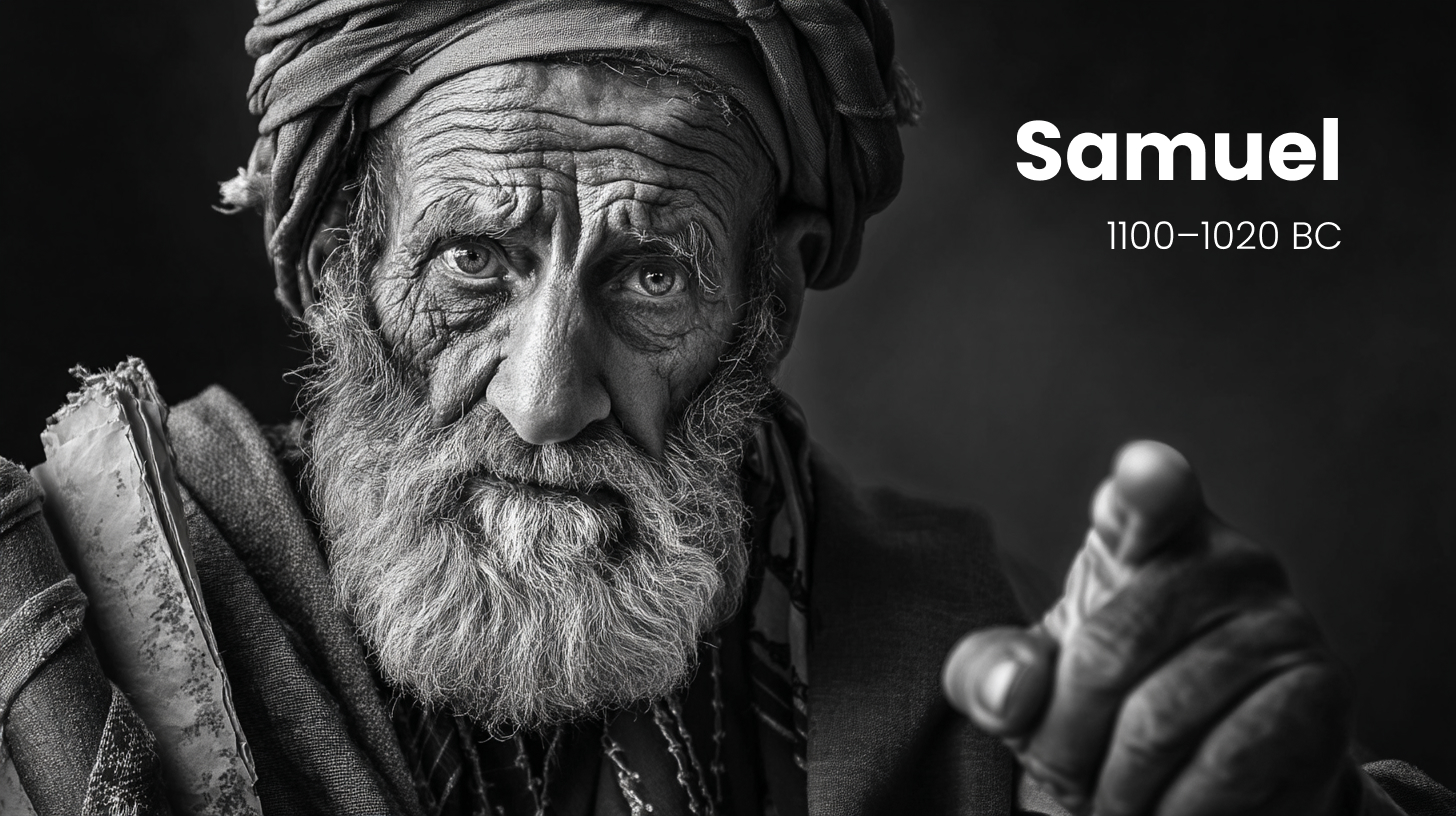
Samuel was the last of an old order and the first of something new. For decades, he led Israel as a judge and prophet. Then everything shifted. The people wanted a king. His story sits at the hinge point of an entire nation’s identity (1 Samuel 1-3; 8; 12; 15-16).
STORY
Here’s something we don’t talk about enough:
Samuel did everything right.
He listened when others couldn’t hear. As a boy, he recognized God’s voice when even the priest missed it (1 Samuel 3:4-10). He grew into a leader the nation trusted. He settled disputes. He spoke truth.
And then the people said, “We want something different.”
That stings.
“Give us a king,” they demanded. “Like all the other nations” (1 Samuel 8:5). They weren’t rejecting Samuel’s competence. They were rejecting his whole approach. The system that had worked for generations suddenly felt outdated.
Samuel took it personally. Of course he did. We would too.
But here’s what makes his response remarkable:
He didn’t fight it.
He warned them. He told them exactly what a king would cost—their sons, their daughters, their land, their freedom (1 Samuel 8:11-18). He made sure they understood. Then he anointed the king anyway.
Not once. Twice.
The first king, Saul, fell apart. Samuel grieved deeply (1 Samuel 15:35). But he didn’t give up. He went to Bethlehem and found David—a shepherd boy nobody expected (1 Samuel 16:11-13).
Samuel became the bridge.
Not the destination. The bridge.
Part 4 of 5 · ProfileMeet Samuel: the full profile →Character profileMaybe that’s the lesson we’re circling around together. Sometimes our job isn’t to be the final answer. It’s to connect what was to what’s coming. The old prophets pointed forward to something greater. Samuel’s anointing of David created a royal line that would eventually lead to another unexpected king—one born in the same town of Bethlehem (Matthew 1:1-17).
Bridges don’t get monuments.
But without them, nobody gets across.
The question isn’t whether things will change. They will. The question is whether we’ll grip tighter or hold open our hands. Whether we’ll block the path or become part of it.
Samuel shows us what it looks like to steward transition instead of fighting it.
And maybe that’s the kind of leader the moment needs.
Get it by email, free
One Bible character and one leadership lesson, every week.