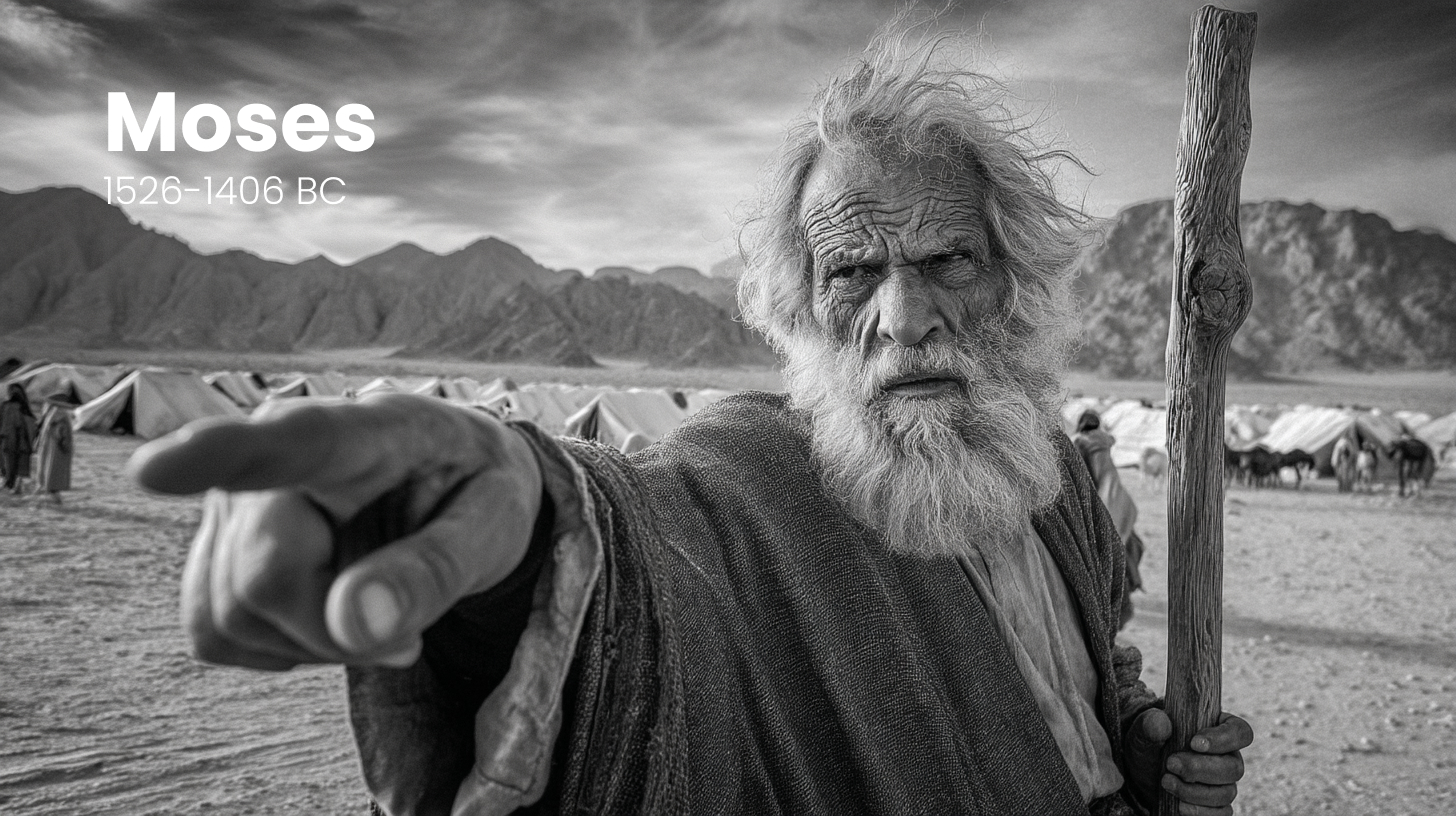
Moses saw more than anyone.
Burning bush. Parted sea. Forty days in the cloud. God’s glory, face to face.
No one had more access.
Which is precisely why his punishment was so severe.
One moment of doubt. One extra strike of the rock. And the man who led two million people out of Egypt would never set foot in the Promised Land.
It seems harsh.
It feels disproportionate.
But here’s what we miss: the punishment was proportional to the privilege.
Moses knew. And in front of all those people, he acted as if maybe God wasn’t quite committed. Maybe Yahweh needed convincing.
The wages of knowing and then questioning are higher than the wages of ignorance.
This is why teachers are judged more strictly. Why leaders carry a heavier weight. Why does the pastor’s failure land differently than the new believer’s stumble?
Not because God plays favorites.
Because revelation creates responsibility.
And we still do it.
“Lord, please be with us.”
It’s the most common prayer in the church. And it’s a lie. He’s already there. He promised. He moved in.
Part 4 of 5 · ProfileMeet Moses: the full profile →Character profileThe question isn’t whether He’s present—it’s whether we’ll act like it.
Have you ever thought that every time we pray please be with us, we’re striking the rock again.
Jesus spent forty days in the wilderness too. No manna. No quail. No water from stone. And He passed the test Israel failed.
Now the Spirit lives in every believer—not in smoke above a tent, but in you. Permanently. Irrevocably.
The question was never God’s faithfulness.
It was always ours.
Get it by email, free
One Bible character and one leadership lesson, every week.